 Posted by: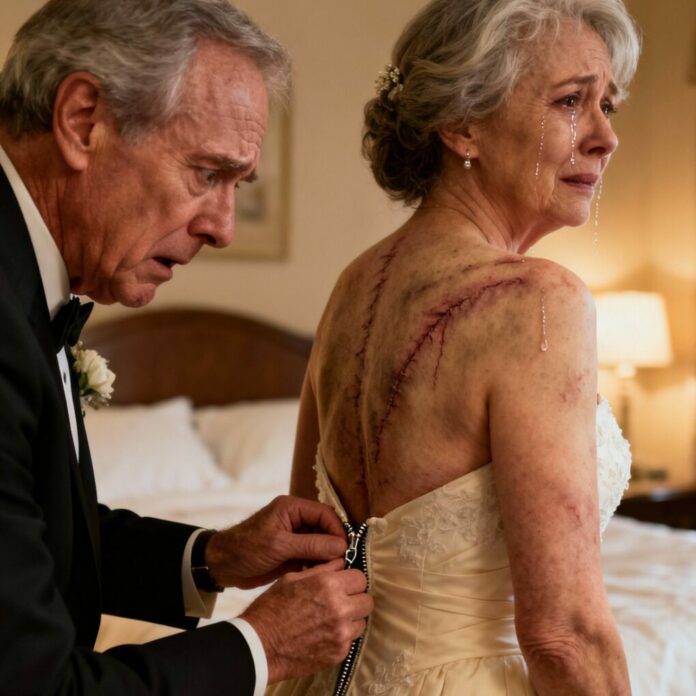
My name is Michael Harris and I am 61 years old. I live in a small residential neighborhood in Cleveland, Ohio , where the winters are long and the nights even longer. My wife, Carol, passed away six years ago after a hard-fought battle with heart failure. Since then, the house has become a museum of memories: her favorite coffee mug, the empty rocking chair by the window, the quilt she knitted but never finished. My two children, Daniel and Rebecca, are loving, but they are very busy. He calls me when he can, he visits me during the holidays, he brings me groceries, and then he goes right back to his own life. I don’t blame them. Life goes on, even when the heart doesn’t respond.
One afternoon, while checking Facebook to distract myself from the silence, I saw a name I hadn’t said aloud in over forty years: Linda Carter . My first love. The girl I used to walk home from school, holding her hand, as if she were the only thing that connected me to the world. We had planned to go to college together, get married, start a life together. But life didn’t ask our permission. Her father was offered a job in Texas , and her family moved. We promised to write to you, but time and distance do what they always do: you faded into oblivion.
My finger stopped on her profile picture: she was older now, her hair was a soft silvery tone, but her smile was still unmistakably the same. I sent her a message.
“Lida? I hope it’s you. I’m Michael… from the Lincoln Institute.”
To my surprise, he responded to the question of minutes.
We started texting daily, then calling each other on the phone, and later video calling. Like two old trees whose roots once grew close, we leaned back toward the familiar. Linda told me that she was also a widow. She lived with her son, who traveled a lot for work. She spent most of her days cooking alone, knitting alone, sitting alone. Her voice trembled as she admitted how quiet her life had become. I understood perfectly.
After months of conversations, we decided to meet. At a small cafe near the lake, she approached me wearing a light blue coat. And so, forty years disappeared. We talked for hours, laughing, remembering, savoring.
And then, one afternoon, I asked her sweetly: “Lida… what if we didn’t have to be alone anymore?”
One month later, we got married.
But on our wedding night, when I helped her unbutton her dress… I was paralyzed.
His back was covered in scars .
As soon as I saw the scars, I froze. I didn’t speak. I couldn’t. The dim light of the lamp cast dark shadows on her skin, revealing long, faded lines: old, deep wounds. Scars that were not the product of chance.
Lida quickly covered herself with the fabric of her dress, her shoulders trembling. Her breathing became ragged and irregular. I stepped back, not with disgust, but in a state of shock, and with my heart so shattered that I felt it in my chest.
—Lida—I whispered—. What… what happened?
He slumped to the edge of the bed, his hands trembling. For a long time, he did not speak. Finally, he looked up, and I saw a sadness much more ancient than that of any of us.

—My late husband—she said in a low voice—. He… wasn’t kind.
My heart sank. —Did he hurt you?
She closed her eyes. “For years. I hid it from my children. From my friends. I never told anyone. I thought… it was my fault. That I must have done something to deserve it.”
I knelt before her, gently taking her hands in mine. “Lida. You didn’t deserve that. Never.”
Tears ran down her cheeks; silent and exhausted tears of someone who had carried the pain and loneliness for decades.
“He never hit me in the face,” she whispered. “He said people would notice. But my back… he said no one would ever see it.”
I felt anger invading me, burning and fierce; not uncontrolled, but deeply protective. I wished I could go back in time and interpose myself between her and every blow she had suffered. I wished I had found her sooner.
But wishing doesn’t change the past.
I sat down beside her and hugged her carefully, as if holding something sacred and fragile. We didn’t speak for a long time. The room was silent, but not empty. It was filled with years of unexpressed pain, and the beginning of something more tender.
That night, we didn’t pretend to behave like newlyweds. We didn’t pretend we were young again. We simply stayed embraced, with our hands clasped, breathing in unison, letting our hearts experience the sensation of security.
For the first time in decades, Lida slept all night without fear.
And for the first time in years, I felt that my life was not over, but over.
Our life together was simple, but it was ours. We spent the mornings preparing breakfast together, jokingly arguing about how much salt should go in the eggs. We planted flowers in the garden: daisies, her favorites. Some days her scars hurt, both the physical ones and the invisible ones. On those days, I would sit with her on the porch swing, her head resting on my shoulder, and we wouldn’t say a word. Just being there was enough.
Her son ended up noticing how different she seemed: calmer, more radiant, almost luminous. He visited her more frequently, surprised to hear her laugh freely for the first time in years. One afternoon, she took me aside.
—Thank you —he said—. I didn’t know how much I needed someone.
I shook my head. “We needed each other.”
The satisfaction was instantaneous. Some nights, Linda would wake from dreams she couldn’t talk about. When that happened, I would hold her hand until her breathing calmed. And some mornings, I would wake with a deep pain from the loneliness I had carried for so long, and she would squeeze my hand without me saying a word. We were learning to accept each other’s silence, and to bear it gently.
As the months passed, our neighbors smiled when they saw us walking slowly down the street, arm in arm. They said we looked like two teenagers in love. Perhaps we were; only now we were older, wiser, more grateful because we understood what loss meant.
One afternoon, while we were watching the sunset from our porch, Linda whispered: “I wish I had met you sooner.”
I kissed her on the forehead and said softly, “We met when we were meant to. And here we are now. That’s what matters.”
She smiled —the same smile thatHe had remained in my memory for forty years— and rested his head against mine.
We didn’t have a great love story full of youth and adventures.
We achieved something more tranquil. More mellow. A love that tasted like fire instead of burning.
A love that came after life broke us —and that gently put the pieces back together—.