 Posted by: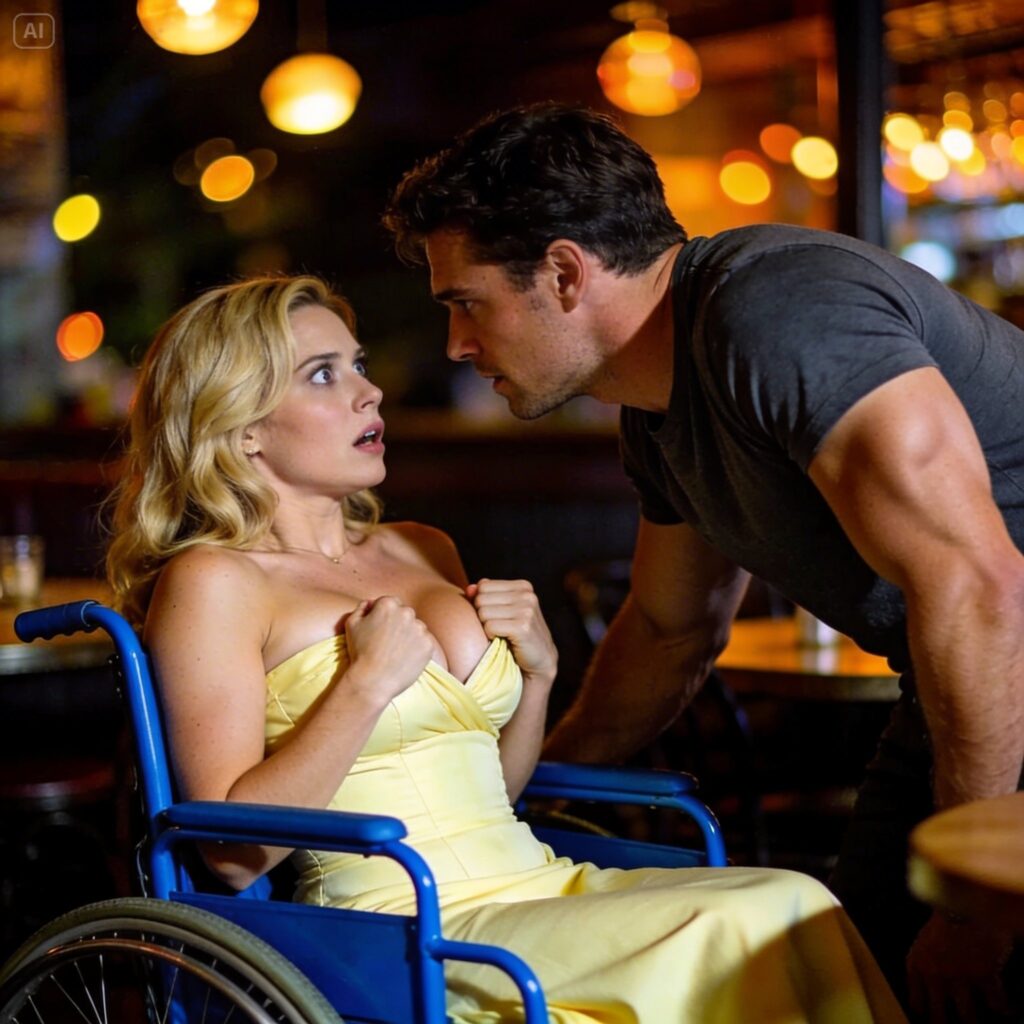
“I’m sorry, I’m in a wheelchair,” she said on a blind date — and the man’s next move changed everything…
Alejandro hadn’t been on a blind date in over six years. Since his wife passed away after a long illness, his life in Guadalajara had dwindled to a carefully constructed routine: packing his son’s lunch every morning, picking him up from elementary school near Parque Rojo, reading him a bedtime story, and feigning strength whenever the eight-year-old asked, “Dad, is Mom watching us from heaven?”
For him, love was like a novel that he had already closed forever.
Until his sister Lucía secretly enrolled him in a “Night of Connections” organized by a community center in the Chapultepec area. And so, that night, Alejandro found himself standing in front of a small coffee shop on Avenida Vallarta, with the warm light escaping through the windows and his palms sweating.
She wondered what she was doing there.
As he pushed open the door, a bell rang softly. He looked around for the woman named Mariana. Before he saw anyone greeting him, a sweet voice sounded behind him.
-Alexander?
He turned around… and remained motionless for a few seconds.
The woman who smiled at him was sitting in a wheelchair. Her dark hair was neatly tied back, and she wore a light blue shawl around her neck. Her eyes were warm, though they reflected a slight tension.
He made a small gesture with his hand.
“Sorry,” she said quickly. “I should have mentioned it earlier. I… I’m in a wheelchair.”
In Alejandro’s chest, dozens of thoughts collided at the same time.
It wasn’t discomfort.
It wasn’t disappointment.
It was fear.
Fear of saying something clumsy.
Fear of hurting someone who had already carried too much.
“Oh…” he hesitated, frowning slightly. “I mean… hi, Mariana, right?”
She let out a soft laugh. Her shoulders relaxed.
—Yes. And you must be Alejandro.
He nodded. Without further thought, he took the chair opposite her and sat down. No awkward pauses. No glances assessing the situation. He simply sat down, as if it were the most natural thing in the world.
—Would you like something to drink? The coffee made in a pot here is very good—she asked.
Mariana watched him closely, as if searching his face for any sign of disappointment. But all she found was sincerity… and the slight nervousness of a man who hadn’t left his comfort zone in years.
As the night wore on amidst the aroma of coffee and the soft sound of a bolero playing in the background, Alejandro discovered that Mariana had been a folk dance teacher in Tlaquepaque. She spoke of colorful dresses twirling under the lights, of cultural festivals, and of stages filled with applause.
She laughed as she confessed that she loved the most absurd reality shows on television. She gave online classes to children who couldn’t attend school due to illness or difficult circumstances.
“Because being at home too much,” she said, “can make you forget that you still have value.”
She also mentioned the accident from three years ago—a hit-and-run on the Periférico. Her voice was calm. Without resentment. Without self-pity.
But she didn’t let that story dominate the conversation.
Alejandro listened more than he spoke. Not out of pity, but because he was genuinely captivated. Her honesty was causing the walls he had built since his wife’s death to begin to crumble.
When the waiter mistakenly left the glass of fresh water too far away for her to reach, Alejandro gently brought it closer without thinking.
Without dramatizing.
Without exaggerating.
Just a natural gesture.
Mariana looked at him again —this time not examining him, but with a gentler gaze.
And at that moment, in that small cafe in Guadalajara, Alejandro understood something: some chapters that we believe are closed… are actually just waiting to be written again.
Mariana held her glass for a few seconds longer than necessary. She didn’t take her eyes off Alejandro.
“Thank you,” she said softly.
It wasn’t just about the water.
Alejandro understood that.
The conversation continued unhurriedly. They talked about the impossible rush-hour traffic, the taco stands that divide friendships based on loyalty, and the music you listen to when no one else is looking. Alejandro confessed that he sang off-key rancheras while cleaning the kitchen. Mariana feigned horror and then admitted that she cried at Christmas commercials.
The laughter was natural. Pure.
For the first time in years, Alejandro wasn’t thinking about what he had lost. He was present.
When the night was over, he hesitated for a second before asking:
—Can I walk you to your car?
She raised an amused eyebrow.
—Are you assuming I don’t drive?
Alejandro felt the heat rise to his face.
—No, I… I’m sorry, I didn’t mean to…
Mariana burst out laughing.
—Relax. Yes, I drive. I’m adapted. And yes, you can come with me.
They walked—or rather, they moved forward together—to the parking lot. There were no exaggerated gestures. Alejandro didn’t try to push the chair without permission. He simply walked beside her.
That, more than anything else, was what she noticed.
Before getting into the car, Mariana looked at him.
—Thank you for not making this… an issue.
-About what?
—From the chair.
Alejandro shrugged.
—I also have things that I don’t want to define my life.
She understood.
They said goodbye with a shy promise to see each other again.
And they did.
The second meeting was at the Metropolitan Park. Alejandro brought his son, Mateo.
It wasn’t an impulsive decision. She thought about it all week. But something inside Mariana told her that hiding that part of her life would be a mistake.
Mateo was observant. More so than Alejandro could sometimes handle.
When he saw Mariana, he looked at the chair. Then he looked at her. Then at his dad.
“Hello,” she finally said. “Does it hurt?”
Alejandro felt his heart stop.
Mariana, however, responded gently:
—Sometimes. But not today. And what hurts when you fall while playing soccer?
—The knees.
“Well,” she smiled. “Other things hurt me. But just like you, I keep playing.”
Mateo looked at her for another second… and then nodded.
That was it.
Children understand more than adults complicate things.
The weeks turned into months.
Alejandro laughed again in his own home.
Mariana started showing up at Friday dinners. She brought homemade desserts that always had an unexpected ingredient. She would sit in the kitchen while Mateo did his homework and help him with math.
One night, when Mateo was already asleep, Alejandro confessed something he had never said out loud.
-I’m afraid.
-About what?
—To be happy again.
The silence that followed was not awkward.
—I’m afraid of not trying —Mariana replied.
And that was the difference.
They didn’t promise it would be easy. They didn’t promise there wouldn’t be dark days. But they promised not to run away.
The real change came one rainy afternoon.
Alejandro received a call from school. Mateo had gotten into a fight with another boy. When he arrived, he found his son sitting in the principal’s office, his eyes red.
“They said Mom is dead because God didn’t want her,” Mateo whispered.
Alexander felt an ancient, heavy fury.
But before he could speak, Mariana —who had insisted on accompanying him— bent down to Mateo’s level.
“Sometimes people say cruel things because they don’t understand pain,” she said. “But your mother didn’t leave because she didn’t love you. And your father doesn’t smile any less because he’s forgotten her.”
Mateo looked at her.
—Have you ever left someone?
Mariana swallowed.
-Yeah.
—And are you coming back?
She looked at Alejandro.
—Sometimes we don’t come back the way we were before… but we can come back in another way.
That night, Mateo asked Mariana to read him the story.
Not to his dad.
Her.
From the doorway, Alejandro understood that something profound was changing.
A year later, Alejandro organized something small.
Nothing extravagant.
He invited Lucia, two close friends, and Mateo.
It was in the same cafe where it all began.
Mariana thought it was just another dinner.
Until Alejandro, with slightly trembling hands, took out a small box.
He did not kneel.
There was no need for drama.
“I don’t want to rescue you,” he said. “I don’t want to be your hero. I want to be your partner. With wheels, without wheels, with fear, with scars.”
Mariana was already crying.
-You’re sure?
—No. But I’m willing.
Mateo raised his hand from the table.
—I vote yes.
Laughter broke the tension.
Mariana agreed.
The wedding day was not traditional.
There was no long entrance or perfect waltz.
There was music, laughter, and an adapted dance floor.
And at the most unexpected moment, Alejandro did something that no one would forget.
He sat down.
In the middle of the track.
At Mariana’s level.
And together, they moved their arms to the rhythm of the music.
It was not the dance she had taught years before.
But it was his.
And that was enough.
Life afterwards was not a story without difficulties.
There were medical appointments. There were gray days. There were insecurities that returned unannounced.
But there were also short trips, ridiculous photographs at village fairs, and shared projects.
Mariana started a community-based inclusive dance program. Children with and without disabilities learned together.
Alejandro began to speak openly about widowhood in support groups.
Mateo grew up seeing that love doesn’t have just one form.
One night, years later, while they were clearing the table, Mateo—now a teenager—asked:
—Dad, what did you think when you saw her for the first time?
Alejandro looked at Mariana.
—I thought he was scared.
—From the chair?
—No —she smiled—. To feel again.
Mariana took his hand.
—And I thought he would leave.
Mateo frowned.
—And why didn’t he leave?
Alejandro answered without hesitation:
—Because staying was more important.
Sometimes, love doesn’t arrive with fireworks.
It arrives in the form of a wheelchair, a cup of coffee, a small gesture that brings a glass closer.
It happens when someone decides to sit next to you instead of looking down on you.
And so, in a noisy city, amidst traffic and boleros, two people who thought their story was already written discovered that there were still blank pages left.
It wasn’t a perfect love.
It was a chosen love.
And that changed everything.