 Posted by: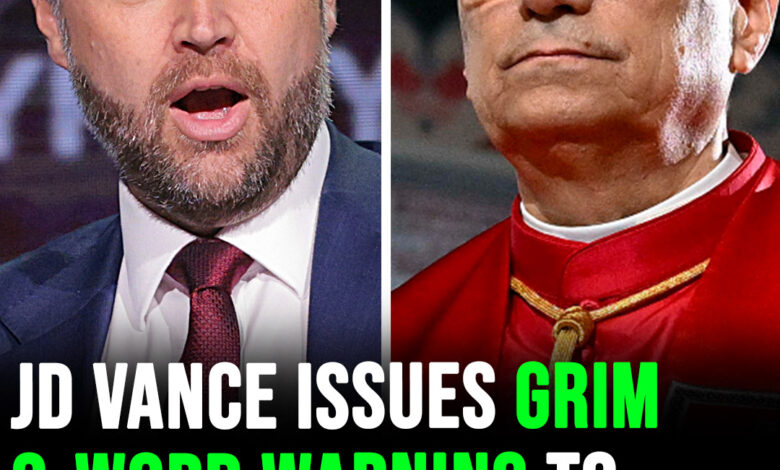
The halls of the Vatican, usually characterized by the hushed whispers of centuries of tradition and the stoic calm of the papacy, are currently vibrating with the tremors of a modern ideological earthquake. What began as a series of typically blunt remarks from Donald Trump has escalated into a full-scale theological and political collision with Pope Leo XIV, a confrontation that threatens to redefine the relationship between religious authority and nationalist fervor. This is no longer merely a disagreement over policy or border security; it has transformed into a high-stakes battle over who holds the ultimate right to define morality in a world increasingly fractured by the machinery of war and the rhetoric of populism.
The catalyst for this unprecedented friction was a scathing condemnation from the Pontiff regarding the escalation of global conflict. Pope Leo XIV, speaking with the moral clarity that has become the hallmark of his papacy, issued a blistering critique of the modern “idolatry of self and money.” He specifically targeted the bombing of civilian infrastructure, a move widely interpreted as a direct rebuke of the scorched-earth rhetoric often championed by the MAGA movement. To the Pope, the current political climate is not merely a struggle for power, but a spiritual crisis where the human person is being sacrificed at the altar of national ego. He challenged the very image of strength that Trump sells to his base—an image built on dominance, isolationism, and the accumulation of wealth—framing it instead as a profound moral failure.
The international response was swift and telling. Giorgia Meloni, the Italian Prime Minister who has often been viewed as an ideological ally to the American right, issued a sharp and unexpected rebuke of Trump’s recent remarks. By calling the former president’s words “unacceptable,” Meloni signaled a significant fracture in the global populist front. Her reaction underscored a terrifying reality for the Trump campaign: even the most sympathetic governments in Europe feel that a line has been crossed when the political sphere begins to treat the Holy See with open hostility.
However, the situation reached a boiling point when JD Vance, the junior senator and a high-profile Catholic convert, entered the fray. Vance did not attempt to de-escalate or find common ground with his spiritual leader. Instead, he issued a grim, two-word warning that has sent shockwaves through the Catholic community and the political establishment alike. By effectively telling the Pope to “stay back” or “stay away” from the political arena, Vance inverted centuries of Catholic teaching regarding the role of the Church in social justice and the pursuit of peace. In Vance’s view, the political necessities of the American state are the final arbiter of truth, and any religious authority that dares to prioritize the “meek and the poor” over the strategic interests of the nation is overstepping its bounds.
Vance’s rhetoric is particularly striking because it reframes the very nature of truth. By telling a Pope to stick to theology and avoid the messy reality of war, he is attempting to domesticate the Church, turning it into a passive institution that exists only to provide comfort, rather than one that speaks truth to power. He even attempted to invoke the historical ghost of World War II, trying to recast the present-day conflicts as a righteous crusade where the ends justify any means. But this historical revisionism purposefully ignores the core of the Pope’s plea. While Vance speaks of crusades and power, Leo XIV speaks of the children huddling in ruins, the elderly abandoned in war zones, and the sick who have no medicine.
This battle is not really about doctrine or the intricacies of canon law; it is about whose suffering counts. It is a struggle between a worldview that sees the world as a zero-sum game of strength and a worldview that insists on the inherent dignity of every human life, regardless of borders or national interests. When Trump and Vance attack the Pope, they are not just attacking a man; they are attacking the idea that there is a moral authority higher than the state. They are challenging the notion that anyone—even a global religious leader—should have the audacity to look at a field of ruins and say “enough.”
The implications of this standoff are staggering for the future of the American electorate. For decades, the Republican party has relied on the support of devout Catholics and Evangelicals, framing themselves as the defenders of faith and tradition. But as Vance and Trump pivot toward an “America First” ideology that views the Pope as a hostile foreign actor, they risk alienating the very people they claim to represent. The crisis exposes a deep-seated tension within the American right: can one remain a faithful member of a global church that preaches universal compassion while simultaneously supporting a movement that prioritizes national self-interest above all else?
As the rhetoric continues to sharpen, the Vatican has remained resolute. The Pope’s representatives have made it clear that the Church will not be silenced by political threats, nor will it retreat from its duty to protect the vulnerable. The “grim warning” from Vance has only served to solidify the Pope’s position as the primary voice of opposition to a brand of politics that views human lives as collateral damage in the pursuit of greatness. The world is watching a civil war for the soul of the West, where the weapons are not missiles, but words, and where the prize is the right to determine what it means to be a “moral” nation in the twenty-first century.
Ultimately, this conflict reveals the fragile nature of the alliance between religious conservatives and the populist right. When the interests of the cross and the flag finally diverge, as they have here, the true colors of each side are revealed. Trump and Vance have shown that for them, the flag is the only thing that matters, and any cross that doesn’t wave in the wind behind them is a target. The Pope, meanwhile, continues to point toward the ruins of the world, reminding us that no nation is so great that it can afford to lose its humanity. The battle lines are drawn, the warnings have been issued, and the world now waits to see if the rhetoric of power can truly overcome the power of the word. Regardless of the outcome, the relationship between the White House and the Vatican will never be the same, and the warning issued by Vance will be remembered as the moment the political right decided that even God’s representative on Earth had to be put in his place.