 Posted by: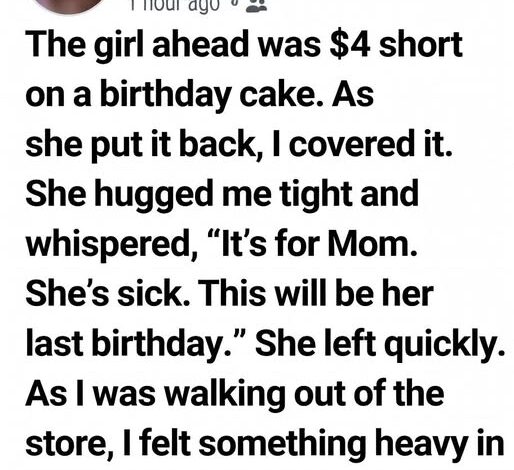
The fluorescent hum of the grocery store usually acts as a sedative, a backdrop to the mindless mental checklist of errands and chores. That Tuesday afternoon started no differently. I was standing in the checkout line, shifting my weight and checking my watch, when the rhythm of the sliding scanner suddenly faltered. A young girl, perhaps ten years old, stood ahead of me. She wasn’t buying candy or toys; she was clutching a small, modest birthday cake with a grip so fierce it looked like she was holding her entire world in her hands.
As the cashier totaled the price, I watched the girl’s posture shift. She began digging into her pockets, pulling out a crumpled handful of singles and a heavy spray of loose change. She counted it twice, her lips moving silently, before her shoulders finally slumped. She was short—only by a few dollars—but in the eyes of a child, that gap might as well have been a canyon. She didn’t cry or plead. With a grace that felt far too heavy for her age, she simply whispered a “thank you,” set the cake aside, and began to turn away, resigning herself to a celebration that would now be hollow.
Impulse took over before my brain could process the math. I stepped forward, swiped my card, and told the cashier to put the cake on my tab. The girl froze. When she looked up at me, the expression wasn’t just one of surprise; it was a profound sense of relief that seemed to vibrate through her small frame. Without a word, she lunged forward and hugged me. It was a desperate, honest embrace that smelled like laundry detergent and outside air. “It’s for my mom,” she whispered into my coat, her voice thick with unshed tears. “She’s not feeling well, and I just wanted to make today special.”
I didn’t have time to respond before she grabbed the box, offered one final, beaming smile, and vanished through the automatic doors. I finished my own transaction in a daze. The store felt different now—vibrant, interconnected, and less like a chore. As I walked to my car, I reached into my pocket for my keys and felt a jagged piece of paper I didn’t recognize. I pulled it out to find a small, hand-drawn note that must have been tucked into my pocket during that brief, frantic hug.
The note was written in careful, looping print: “Thank you for helping me. I didn’t know what to do.” Below the text was a shaky drawing of a cake with a single, oversized candle. I stood in the parking lot, the fading April sun hitting the paper, and felt a lump form in my throat. This child, in the midst of her own family crisis and the panic of being short on cash, had the presence of mind and the heart to carry a “thank you” note ready for a miracle she didn’t even know was coming.
That evening, the world felt lighter. We often convince ourselves that to make a difference, we need grand gestures or massive donations, but that little girl taught me otherwise. Kindness isn’t about the amount on the receipt; it’s about the willingness to notice the person standing three feet in front of you. I’ll never know her name or if her mother recovered, but that crumpled drawing sits on my fridge now. It serves as a permanent reminder that even in a rushing, digital world, a few dollars and a moment of attention can create a ripple that changes the frequency of a stranger’s entire life.