 Posted by: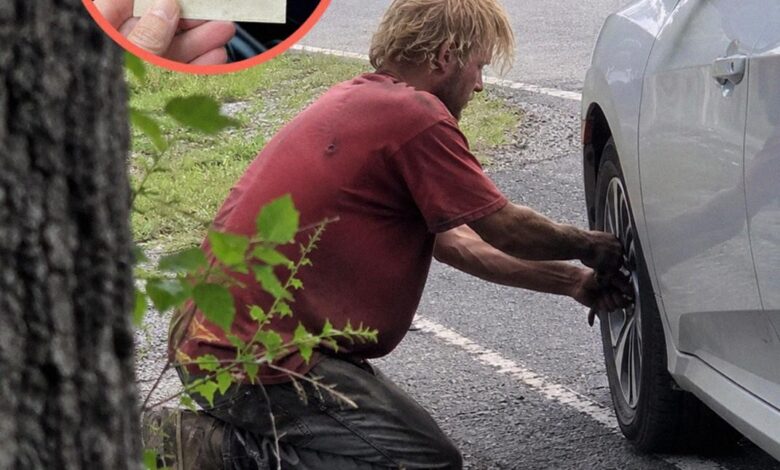
For two agonizing decades, my life has been fractured into two distinct realities: the woman I was before Daniel disappeared and the hollow shell I became afterward. I lost my seven-year-old son in a blink of an eye at a highway rest stop, and for twenty years, the silence of his absence has been a constant, deafening roar. I stopped driving Route 9 years ago because the road felt like a crime scene, but a forced detour dragged me back into my worst nightmare. Then, a ragged stranger changed my flat tire, handed me a Polaroid, and whispered my name.
My life effectively halted in 2006. Daniel had been begging for a Sprite, a mundane request that ended in a tragedy I still struggle to process. I was inside the station for less than two minutes. When I walked back out, the parking lot was empty. The following years were a blur of police interrogations, false leads, and the slow, grinding death of hope as the case eventually gathered dust in a neglected filing cabinet. I retreated from the world, convinced that Route 9 was a place where children simply vanished into thin air, leaving only ghosts behind.
Last Tuesday, my GPS rerouted me to that cursed stretch of highway due to a road accident. My pulse spiked as I saw the sign, and within twenty miles, my back tire blew out. I sat on the shoulder, paralyzed by a familiar, crushing grief, until a knock on the window startled me. An older, unkempt man stood there. His clothes were worn and his boots were falling apart, but his hands were steady and strong. He changed the tire in silence, acting with a practiced, calm efficiency that struck me as odd for a stranger.
As he finished, he wiped his hands on a rag and looked at me with eyes so profoundly sorrowful that I felt my resolve crack. He gently called me by my name—Margaret. I froze. I had not uttered a single word to him, yet he knew exactly who I was. Before I could demand an explanation, he retreated toward the treeline. I turned toward the passenger seat, and my world tilted off its axis. There lay a Polaroid of a boy in a red shirt with a crooked front tooth. It was Daniel, but he was older—a child I had never seen before.
I frantically called the former sheriff, now the mayor, who had handled the original investigation. The moment he saw the digital image of the photo I sent, his voice lost all color. He warned me not to go to the address scrawled on the back of the print, claiming it belonged to the niece of a man named Roy who had worked maintenance on Route 9 back when Daniel vanished. I didn’t listen. I drove to the small, ordinary house, and when the door opened, the woman standing there looked at the photo, then at the small boy standing behind her in the hallway.
He had Daniel’s eyes. The woman, Kate, ushered me inside, trembling as she confessed that her uncle Roy had raised the boy she knew as Danny, claiming his father had been a friend who simply disappeared. Roy had moved frequently, keeping the boy out of school until he could manufacture fraudulent records. Kate had only discovered the truth after Roy’s death three weeks prior. She had found the clippings, my public pleas, and the missing-child posters I had lived for. She had already sent a copy of the photo to the mayor, who had done absolutely nothing with the information, choosing instead to protect himself rather than reunite a mother with her lost child.
I left Kate and drove straight to the lumber yard she described. I found him stacking boards, a man in his late twenties with broad shoulders and the same soft, familiar features I had memorized from a childhood portrait. I approached him, trembling, and asked if he remembered a rest stop on Route 9 and a mother who had gone inside to buy him a drink. He looked unsettled and blank, the memory buried under years of false stories. I ran to the nearest gas station, bought a cold green-labeled Sprite, and placed it in his hand.
The moment he felt the condensation on the bottle, the dam broke. He stared at the green label, his breathing ragged. He remembered the red shirt, the trees, and the terrifying realization that he had wandered off and couldn’t find his way back to the building. He whispered, “Mom?” and the sound of it shattered every defense I had constructed over the last twenty years. He was warm, he was alive, and he was standing right in front of me. We returned to the house to find the boxes Roy had kept—clippings from every single anniversary of his disappearance, a meticulous, obsessive record of a life he had stolen from me.
Tucked into one box was a handwritten note from Roy, confessing that he had found a crying boy behind the rest stop and had panicked because he had active warrants. He had intended to call the police in the morning, but that morning turned into a lie that lasted two decades. It wasn’t a grand conspiracy; it was the cowardly act of a weak man who chose to ruin a family to save his own skin. Later that night, the mayor arrived, looking pale and useless as the state police moved to arrest him for his failure to act on the evidence Kate had sent him days before.
Daniel and I sat in the quiet kitchen as the dust settled. He was stunned, mourning a childhood that had never existed and a father who had been nothing more than a kidnapper. We didn’t get back the graduations, the birthdays, or the quiet moments of his youth, but as I sat there, my grandson pressed a dinosaur sticker into my hand, and Daniel told me he had always known deep down that I was still looking for him. The stolen years are gone, and the ache will likely never fully disappear, but after twenty years of searching, the road finally gave me back the only thing that ever truly mattered.