 Posted by: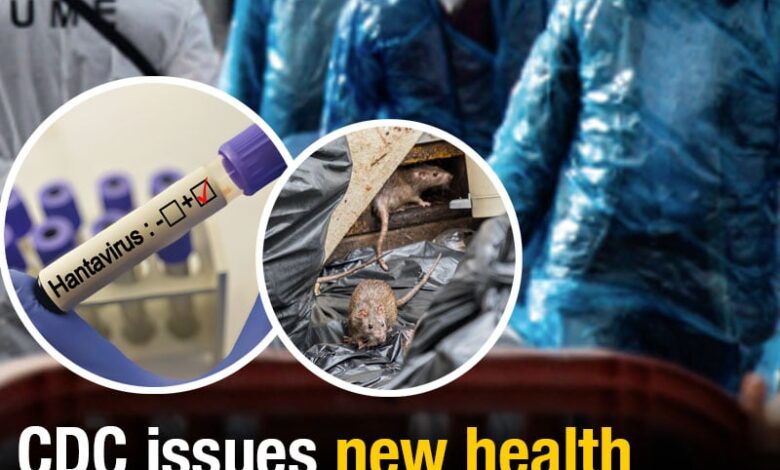
The highly clinical, aggressively managed world of global epidemiological defense has officially entered a state of maximum alert, triggering a series of high-stakes federal containment protocols designed to neutralize a potentially catastrophic biosecurity threat. When an exotic, highly lethal pathogen breaches the insulated environment of an international maritime vessel, the margins for administrative error or structural delay completely evaporate. Public health agencies are forced to instantly mobilize specialized biohazard extraction teams, deploy state-of-the-art negative-pressure isolation units, and enact sweeping national quarantine mandates to prevent a localized outbreak from transforming into an uncontrollable domestic health crisis. This terrifying scenario has transformed from a worst-case academic simulation into a stark, immediate reality for seventeen American travelers who are currently being systematically routed into a heavily fortified federal quarantine facility under the intense surveillance of the Centers for Disease Control and Prevention.
The genesis of this unfolding medical emergency materialized deep within the isolated, sub-antarctic waters navigated by the MV Hondius, a premium remote expedition cruise vessel packed with international travelers. What commenced as a luxury voyage into the untouched frontiers of nature rapidly deteriorated into a claustrophobic nightmare when multiple passengers abruptly collapsed on deck, exhibiting sudden, hyper-aggressive respiratory distress and internal hemorrhaging. On-board medical staff were instantly overwhelmed as three individuals succumbed to the mysterious illness with shocking velocity, dying within hours of their initial symptom onset. Rapid molecular diagnostic testing and cellular analysis conducted via satellite communication with global health networks confirmed the absolute worst fears of the international medical community: the vessel had become an active breeding ground for an exceptionally rare, highly mutated strain of hantavirus known specifically to science as the Andes virus.
While traditional hantaviruses typically demand direct contact with the dried excreta, saliva, or nesting materials of infected rodent populations to cross the species barrier into human hosts, the South American Andes variant possesses a uniquely terrifying, evolutionary anomaly. It remains the only known hantavirus strain on earth capable of executing efficient, direct person-to-person transmission, utilizing microscopic respiratory droplets generated through coughing, sneezing, or intimate vocal proximity to claim new victims. Combined with a historically documented case-fatality rate that can ruthlessly claim up to fifty percent of those it successfully infects, the sudden, uncontained proliferation of this specific pathogen within the tightly enclosed, recirculated air systems of a commercial cruise ship represented an immediate, catastrophic threat to global health security.
As the distressed vessel finally made port and panic-stricken international travelers began to rapidly scatter across various transit hubs, federal health authorities in the United States executed a lightning-fast, highly coordinated intelligence operation to track, intercept, and isolate every single American citizen who had been exposed to the shipboard environment. Over the course of a few frantic hours, seventeen Americans became the central focus of an urgent, sweeping CDC health alert, their impending repatriation managed not like a standard customs processing event, but as a hyper-delicate, high-stakes biohazard containment maneuver. Rather than being permitted to return to their respective home states or reunite with anxious family members, these travelers were immediately met on the tarmac by specialized personnel outfitted in heavy hazardous materials suits, loaded into secure biocontainment transport pods, and routed directly under federal escort to the University of Nebraska’s specialized National Quarantine Unit.
This premier, heavily fortified medical facility—internationally recognized for its unparalleled capacity to safely manage the world’s most dangerous pathogens, including Ebola and highly weaponized respiratory agents—will serve as the absolute baseline of defense for the foreseeable future. Inside the secure perimeter of the negative-pressure isolation wings, each of the seventeen repatriated citizens is currently undergoing exhaustive, round-the-clock clinical evaluations conducted by elite infectious disease specialists. Federal epidemiologists are systematically constructing hyper-detailed exposure matrices, meticulously classifying each individual into low, medium, or high-risk containment tiers based entirely on their physical proximity to the deceased passengers, their sharing of dining facilities, and their exposure to the ship’s localized ventilation nodes.
Recognizing the immediate potential for widespread societal panic, the acting director of the CDC, Dr. Jay Bhattacharya, has repeatedly stepped before national news microphones to deliver a message of unyielding institutional control and absolute operational transparency. The nation’s top health official has been fiercely adamant that the unfolding biohazard operation will absolutely not be permitted to devolve into another uncontrolled, systemic public health catastrophe, emphasizing with total clinical confidence that the federal government is utilizing highly specialized, hyper-aggressive hantavirus suppression protocols that have been successfully battle-tested during localized outbreaks in South America. Dr. Bhattacharya explicitly reassured the public that the implementation of a localized national quarantine center is a reflection of absolute administrative abundance of caution rather than an indicator of a current, uncontained domestic outbreak.
Despite these intense, highly professional efforts to project an aura of total institutional stability, the global public and international financial markets are currently waiting in an uneasy, deeply anxious silence. The collective memory of how rapidly a seemingly isolated, low-risk foreign pathogen can completely breach official containment barriers and unravel the fabric of modern civilization remains incredibly raw and highly synchronized across the national psyche. As the seventeen isolated Americans remain securely locked behind the reinforced glass and advanced filtration systems of the Nebraska biocontainment complex, the entire scientific community remains hyper-focused on the data emerging from their daily lab reports. In this quiet, high-stakes war against an invisible, hyper-lethal microscopic adversary, the world is learning once again that the line separating complete domestic security from a full-scale public health emergency is entirely dependent on the absolute, unyielding precision of a single quarantine lock.