 Posted by: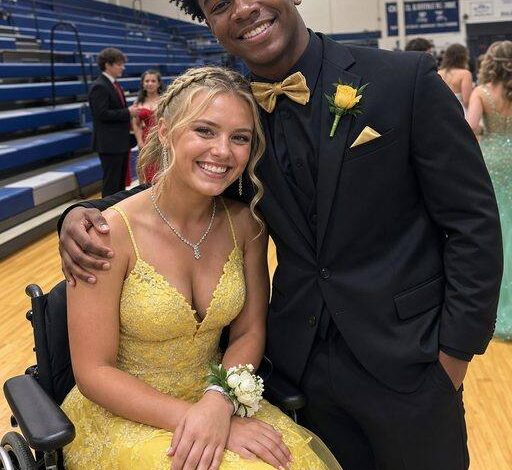
The music from the high school gymnasium echoed across the parking lot long before the heavy double doors even opened. Outside, the night air was thick with the nervous laughter of couples adjusting corsets, taking flash photography under strings of faux-fairy lights, and walking hand-in-hand into their senior prom. For one fleeting second, staring out from the passenger seat of our van, I felt a familiar urge to turn around and hide. I wanted to tell my grandmother to just take me back home to our quiet living room. But I had already come too far to back out, and Grandma Ruth was not about to let me forfeit a milestone I had spent weeks preparing for.
That prom season was supposed to be a celebration, but for me, it carried the weight of a lifetime of survival. Eight years prior, a sudden and violent rainy-night car collision had completely rewritten my existence. I retained only fragmented, terrifying memories of that evening: the blinding glare of oncoming headlights, the screeching sound of tearing metal, and the sterile smell of a hospital room where I woke up to find my grandmother gripping my hand until it was white. My parents did not survive the impact. I walked away from the wreckage with my life, but I lost the use of my legs permanently. From that moment forward, it had been Grandma Ruth and me facing the universe together. She refused to let me grow up wrapped in pity, engineering an environment where I never felt broken. When prom arrived, she pushed me through the dress shops with stubborn enthusiasm until we found a simple, elegant gown that made me feel beautiful.
Yet walking into the crowded gymnasium brought reality rushing back with brutal clarity. While a few classmates offered polite nods or waved from a distance, an invisible wall immediately formed around my wheelchair. The girls clustered into tight, exclusive circles, whispering behind manicured hands while trying desperately to look anywhere but at me. The boys strolled past my area as if I were a permanent fixture of the architecture. There was no overt cruelty, no mocking laughter, and no mean words, but the sheer indifference cut far deeper than an open insult would have. To escape the suffocating loneliness of the main floor, I quietly rolled myself into a shadowed corner near the bleachers, pretending to be deeply fascinated by the decorations while my heart broke silently in two.
I was on the absolute verge of calling my grandmother to pick me up early when a figure stepped directly into my line of sight. It was Daniel. We shared a couple of advanced classes, but we had never really spoken beyond basic academic pleasantries. He was widely known across the school as an effortlessly confident, genuinely kind person who moved through social circles without a shred of pretension. He looked down at me with a warm smile and asked if I was hiding out in the corner on purpose. When I awkwardly deflected, he extended a hand and invited me to dance. I almost laughed out loud from sheer disbelief, reminding him immediately that my wheelchair made a traditional dance somewhat complicated. Daniel just smiled, stepped behind my chair, and told me it didn’t complicate a thing as he gently guided me toward the center of the crowded floor.
At first, the weight of a hundred staring eyes made my shoulders lock up with intense embarrassment. I wanted the floor to open up and swallow me whole. But Daniel moved with total confidence, stepping naturally with the rhythm of the music and turning my wheelchair smoothly so that it became a seamless extension of the choreography. He didn’t treat me like a tragic charity case or a public spectacle; he just treated me like a normal girl at her senior prom. Slowly, the self-consciousness evaporated, replaced by a genuine laugh that bubbled up from deep within my chest. For the first time in eight years, I didn’t feel defined by my physical limitations or my tragic past. I felt entirely ordinary.
The euphoria of that magical evening vanished completely the following morning when a loud, urgent knocking disturbed our quiet household. Grandma Ruth opened the door to find two uniformed police officers standing on the porch. My stomach dropped into a cold knot as I rolled into the hallway and heard them state they were looking for me regarding an ongoing investigation into a young man named Daniel. The officers explained that they had suddenly reopened the case file on the car accident that killed my parents, revealing that Daniel had just come forward with shocking, firsthand information about the night of the crash.
Stunned and unable to process how a classmate could possibly be connected to my childhood tragedy, I didn’t wait for the officers to finish their bureaucracy. I grabbed my purse, tracked down Daniel’s address from a classmate, and eventually located him at the local community center where he spent his weekends volunteering. The moment our eyes met across the recreational room, the truth became instantly clear. He had been carrying a devastating secret for nearly a decade, and he had been waiting for this exact confrontation.
Daniel sat me down and confessed that he was eleven years old on the night my parents died. After a bitter argument with his family, he had slipped out into the storm on his bicycle and witnessed the entire collision from the tree line. He watched a mysterious vehicle pause briefly at the scene before speeding away into the darkness. Running toward the smoking wreckage, Daniel had managed to pry open the crushed rear door of our car, dragging my unconscious body out onto the grass just moments before the engine compartment erupted into a wall of flame. He had tried with all his childhood strength to open the front doors to save my parents, but the heat and the twisted metal proved completely insurmountable for an eleven-year-old boy. He had to make the agonizing choice to pull me to safety or perish alongside them.
In the aftermath, his terrified parents had pressured him to remain silent to shield him from the intense legal scrutiny and psychological trauma of a fatal accident investigation. He carried that crushing guilt in silence until he recognized me years later at school. The weight of his silence finally became too heavy to bear, prompting him to walk into the police precinct and deliver a detailed childhood sketch of the hit-and-run vehicle, including a partial license plate number he had memorized through the rain.
Because of Daniel’s immense bravery, the authorities were able to track down the rogue vehicle and arrest the driver who had evaded justice for nearly eight years. Later that evening, I asked Daniel to drive me back to the isolated stretch of road where the accident occurred. For years, that location had lived in my mind as a place of pure horror and ultimate loss. But standing there in the twilight next to the boy who had danced with me, my perspective shifted entirely. I realized that dark road was not just the place where my family ended; it was the exact place where an incredibly brave child had gifted me a second chance at life. Looking up at Daniel through tears of profound gratitude, I finally felt free from the shadow of my past, ready to embrace whatever lay ahead.