 Posted by: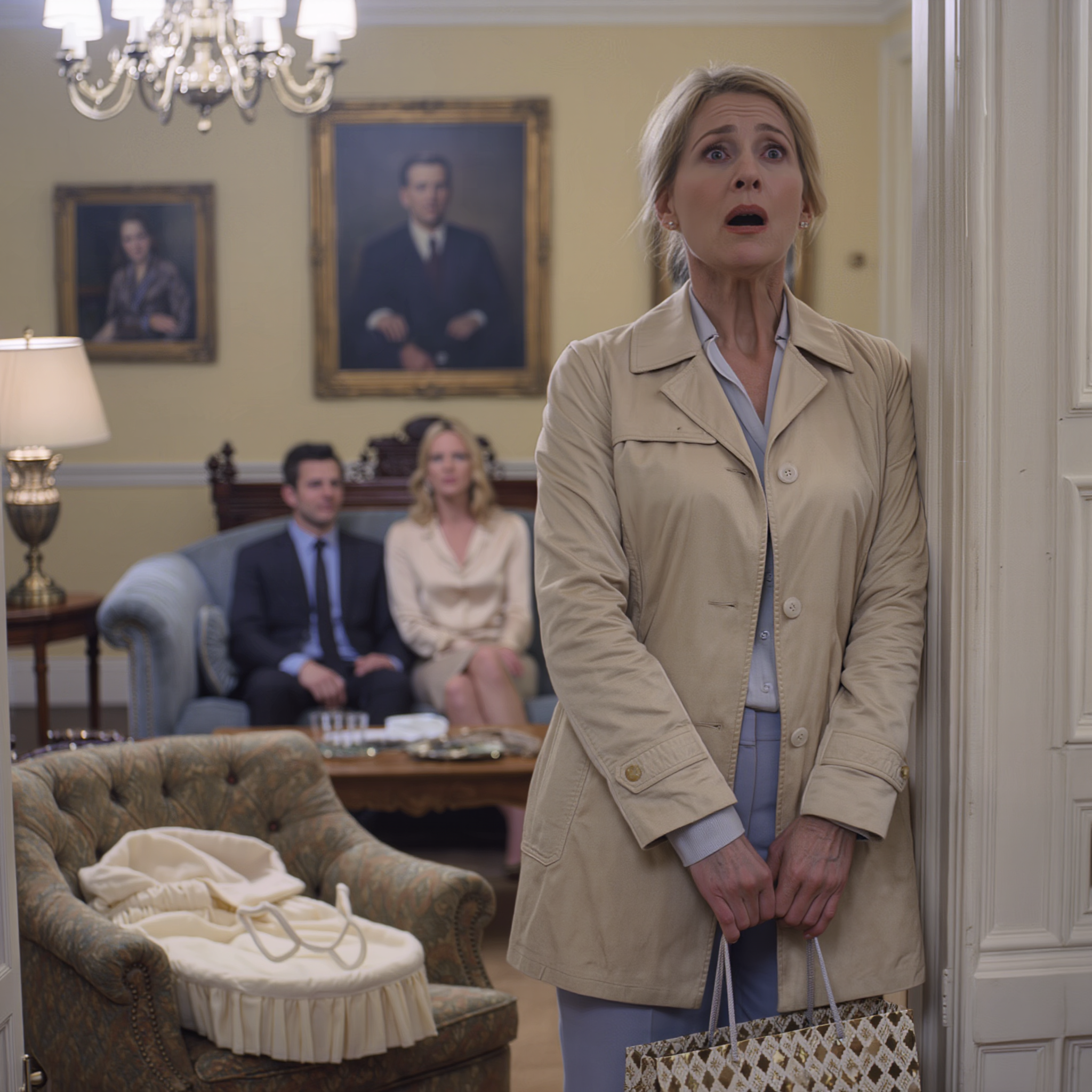
My son’s voice broke my heart before I even heard what he had done.
I was sitting in a business center in a Berlin hotel, a tiny American flag magnet holding my husband’s photo to the side of my laptop, when my phone lit up with Christopher’s name. Outside the window, strangers hurried past with briefcases and umbrellas. Inside, I had my keynote slides open, bullet points about occupancy rates and market trends glowing on the screen. My life was numbers, contracts, and flights.
Then my son called to tell me a new life was about to begin.
“Mom, it’s happening,” he said, breathless. “Vanessa’s in labor.”
I closed the laptop without saving. The conference, the fee, the 200 registered guests—none of it mattered for one perfect second. My heart pounded so loudly I could barely hear him.
“Right now?” I asked.
“Right now. We’re at the hospital. They’re saying a few more hours. You have a granddaughter coming, Mom.”
A granddaughter. The word landed in my chest with the weight of a promise.
“I’m getting on a plane,” I said. “I’ll be there.”
“Don’t you have that conference thing?” Christopher asked. “You’re the keynote speaker, right? That’s a big deal. Come after. She’ll still be here.”
I stared at my slides. At the hotel’s tiny U.S. flag magnet I traveled with and stuck to every rented desk, like a private superstition that meant I would always find my way home.
“I’ll be there as soon as I can,” I said. “Four days at most. Tell Vanessa I’m coming. She’ll be glad. I love you, Christopher.”
“Love you too, Mom.”
He hung up, and that was the last ordinary moment of my life.
A promise is easy to make when you still believe everyone shares the same definition of love.
I gave my keynote three days later, on autopilot. The applause sounded thin and far away. I went straight from the conference hall to the airport, flew Berlin to JFK, slept in pieces over the Atlantic, and landed with swollen feet and a heart beating too fast.
I rented a car, tossed my carry-on into the back seat, and drove up I‑95 toward Connecticut. Somewhere along that highway, my granddaughter existed. I imagined a tiny pink hat, a hospital bracelet, the wrinkled seriousness newborns wear like they already know too much.
In Westport, I stopped long enough to buy gifts: a silver rattle that chimed softly when I shook it, a cashmere baby blanket almost too soft to touch, and a stuffed lamb with stitched black eyes. Too much, probably. I didn’t care.
Christopher and Vanessa lived in Greenwich, in a white colonial on Round Hill Road set back behind ancient maples and manicured hedges. Old money, old families, the kind of address that sounded like a finishing school.
I pulled into their circular drive just after noon, my chest tight with anticipation. My hands shook as I grabbed the gift bag and walked up the stone steps. I didn’t even ring the bell. I was about to knock when the door opened.
Christopher stood there like a ghost of himself, pale and hollowed out, as if the joy I expected had been scooped clean out of him.
“Mom,” he said.
“Let me see her,” I said, brushing past him. “Where is she?”
He stepped back but didn’t move aside. “Come in. We need to talk first.”
Those were not the words a new grandmother should ever hear.
I froze halfway across the threshold. “Christopher, where is my granddaughter?”
Vanessa appeared behind him, immaculate, as if she’d stepped out of a lifestyle magazine. White linen pants, a silk blouse, perfectly styled hair. No hospital band, no spit‑up on her shoulder, no dark circles under her eyes. No baby in her arms.
“Hello, Nancy,” she said, like we were meeting at a charity luncheon.
They led me not to the family room, where I imagined a bassinet and soft blankets, but to the formal living room—the one with stiff antique chairs, a glass coffee table, and a giant oil painting of Vanessa’s grandmother looking down her nose at everyone.
I refused to sit.
“Where is the baby?” I demanded.
Christopher sat on the sofa. Vanessa sat beside him, hands folded neatly in her lap.
“Sit down, Mom,” he said. “Please.”
“I don’t want to sit,” I snapped. “I want to meet my granddaughter.”
Christopher stared at his hands. Vanessa looked straight at me, her face composed and distant.
“We placed her for adoption,” Vanessa said.
The room went silent, like someone had sucked all the air out through the high plaster ceiling. I heard the words, but they didn’t line up, didn’t make a sentence that belonged in my life.
“I’m sorry,” I said slowly. “You did what?”
“The baby,” Christopher said. “We gave her up. It’s already done.”
The gift bag slipped from my fingers to the floor. The silver rattle clinked against the lamb’s plastic eye.
“You called me from the hospital four days ago,” I said. “You told me Vanessa was in labor, that I had a granddaughter.”
“We did have a daughter,” Vanessa said. Her voice was flat, rehearsed. “And we made the best decision for our family.”
I could feel my pulse in my teeth.
“Where is she?” I whispered.
Christopher finally looked up. His eyes were wet but not ruined. Not like mine.
“She’s with an agency,” he said. “They’ll place her when they find the right family.”
“I’m the right family,” I shot back. “Tell me which agency and I’ll go get her right now. I will raise her myself.”
Vanessa shook her head slowly, as if she were declining dessert.
“It’s a closed adoption,” she said. “We’re not required to disclose that information. We’ve already signed everything. It’s done.”
“How old is she?” I asked.
“She was born five days ago,” Christopher said quietly.
Five days. My granddaughter had been alive for five days. I’d crossed an ocean to meet her and they’d already given her away.
“Why?” I asked. The word tore out of me.
Vanessa straightened her shoulders, the way she did at press conferences.
“She’s deaf,” she said. “The hospital did the standard hearing screening before discharge. She failed it. They tested again and confirmed it.”
I stared at her. “She’s deaf,” I repeated.
“Yes,” Vanessa said. “And we’re not equipped to handle a damaged child. Be realistic, Nancy. The specialists, the therapy, the time. My family wouldn’t accept a defective grandchild in the family line.”
The word defective hung in the air like a bad smell. I felt physically ill.
My hands shook so badly I pressed them against my thighs to steady them.
“You’re talking about your daughter,” I said. “My granddaughter. She’s not a broken appliance you can send back because it makes a funny noise.”
Christopher flinched.
“Tell me where she is,” I said again. “Which agency? I’ll adopt her. I’ll sign whatever papers you want. You’ll never have to see her if that’s what you want, but you will not erase her.”
“You can’t,” Christopher said. “We already checked with attorneys. Grandparents don’t have legal standing in adoption cases. The courts protect parental decisions. The records are sealed.”
I stared at my son—the boy I’d raised alone after his father died, the boy I’d worked two jobs for so he could have a better life, the boy who used to cry when he saw stray dogs because he didn’t want them to be lonely—and I didn’t recognize the man in front of me.
“If you can throw away your own child,” I said softly, “then you’re not the son I raised.”
Christopher’s face hardened. “Then maybe you don’t know me at all. You live in London. You visit once a year. You don’t get to fly in and tell us how to run our lives.”
“Christopher—” Vanessa touched his arm.
He jerked away.
“It’s done, Mom,” he said. “She’s gone. You need to accept that.”
I bent down, picked up the gift bag with shaking hands, and stood.
“I will never accept it,” I said.
Then I walked out of their perfect colonial, down the stone steps, and away from the life I thought I understood.
There are moments when your story shatters in your hands, and you have to decide whether you’re going to let the pieces cut you—or pick them up and build something new.
I drove without thinking, back down the highway until the road blurred. When I saw a Marriott sign, I pulled off and checked in under my own name because I wanted my son to know I was still in the same state, breathing the same air as the baby he’d abandoned.
The room was beige and anonymous. A framed print of a lighthouse hung over the bed, the beam painted in a frozen sweep across a dark sea.
I sat on the edge of the mattress in my coat. Then I lay back. Then I curled on my side and sobbed so hard my ribs hurt. Somewhere in Connecticut, my granddaughter lay in a plastic crib in some stranger’s home or a quiet nursery in an agency facility, her world already defined by silence and rejection.
I cried until my head pounded. Then I stopped.
The ceiling stared back at me, blank and uncaring. I thought about the hospital tests, the words deaf and defective, the sealed records, the agency forms already signed.
Christopher was right about one thing: I had no legal standing. I couldn’t storm into an adoption agency and demand anything. The courts wouldn’t care that I was willing to drop everything, to spend every dollar I had, to raise this child.
But the law is not the only way to move through the world.
I sat up and wiped my face with the heel of my hand.
I had money. I had time. I had a lifetime of stubbornness. And I had just discovered the shape of my new life’s work.
I was not leaving the United States without my granddaughter.
That decision sat in my chest with the heaviness of grief and the bright, sharp edge of a vow.
I pulled out my laptop and opened it on the bed. My hotel key, with a tiny plastic rectangle fringed in stars and stripes that read MARRIOTT REWARDS, rested beside the trackpad. I pressed my fingers to it like I was grounding myself.
Then I started searching.
“Private investigator Connecticut missing family member,” I typed.
I found one with solid reviews and sent an inquiry. Then another. Then a third. I looked up adoption law, agency protocols, closed versus open records. It all came back the same: I had no rights.
So I decided to build leverage.
If I couldn’t demand that my granddaughter be placed with me, I could at least make sure that when—if—I found her, she wouldn’t look up and see another hearing person who hadn’t bothered to learn her language.
I searched “American Sign Language classes Greenwich,” and a listing popped up for a beginner course at the library on West Putnam Avenue, starting in one week. I registered and paid without thinking.
If I couldn’t hold my granddaughter yet, I would hold her language in my hands.
Six months later, I sat in a circle of plastic chairs in that library, my fingers trembling as I tried to shape the letter G.
“Practice,” our instructor, a Deaf woman named Carol, signed. Her hands moved with sharp, graceful precision. “Every day. Muscle memory.”
I practiced in the car, hands on the steering wheel at red lights. I practiced in the grocery store line, my left hand fingering the alphabet against my right palm. I practiced in my rented apartment at midnight, when the only light came from the cheap floor lamp and the streetlights outside.
I mixed up B and F constantly. My hands cramped. My shoulders ached. My progress was embarrassingly slow.
Meanwhile, the first private investigator I’d hired in Greenwich returned my retainer fee after eight months.
“I’m sorry, Ms. Walker,” he said in his office, hands spread in a practiced gesture of regret. “Closed adoption, sealed records, limited access. Without cooperation from the agency or the birth parents, there’s just no trail.”
I thanked him, walked out, and hired another one.
At home, I bought a large paper map of the East Coast and pinned it to the bedroom wall of the small apartment I’d leased in Westport. I bought pushpins in three colors: red, blue, and green. I stuck the first red pin in Greenwich—the place my granddaughter had been born, the place she’d been discarded.
Every time I walked past that map, the lone red pin stared back at me like an accusation and a promise.
That map became my second heartbeat.
Over the next year, I added more pins. Red for every adoption agency I visited or contacted, blue for every orphanage or children’s home, green for every school or program that served Deaf children. The map slowly transformed into a mosaic of my stubbornness.
I drove hundreds of miles. I walked into stale offices with plastic chairs and laminated posters about loving homes. I sat across from social workers behind metal desks, hands folded neatly, their eyes sharp and professionally kind.
“I’m looking for my granddaughter,” I said. “She was born in Greenwich. She’s Deaf. She was placed at five days old.”
Most shook their heads immediately. “We can’t share any identifying information,” they said. “State law is very clear.”
Some softened when they saw my face. “I’m sorry,” a few said quietly. “I wish I could help. But I would lose my job.”
Others didn’t bother with sympathy. “Ma’am, you’re not part of this legal process,” one woman told me briskly. “You’re a stranger to this child.”
Stranger. The word cut deeper than defective.
At night, I went to sign language class. My grammar was clumsy, my facial expressions too restrained, but slowly, painfully, I learned. After the first year, I could hold a basic conversation in American Sign Language. It wasn’t pretty, but it was something.
The second investigator quit after ten months. “I’ve hit a wall,” he said. “There’s nothing to go on.”
“I understand,” I said. “Thank you for trying.”
I walked out of his office, sat in my car, and screamed into my hands. Then I wiped my eyes and hired a third PI. This one asked for a $12,000 retainer. I wired the money the same afternoon.
Twelve thousand dollars to keep a promise no court recognized—but I did.
I started going to Deaf community events: coffee meet‑ups in Stamford, social nights in Norwalk, a book club in Hartford. At first, people assumed I was a social worker or a well‑meaning volunteer. A middle‑aged hearing woman with halting sign language and questions about Deaf education and adoption triggered automatic suspicion.
A few people were open. Most hung back, polite but distant. I understood. Hearing people had taken enough from them.
I kept showing up anyway.
Eventually, a woman named Rita started signing with me over coffee.
“You’re improving,” she said. “Your grammar still hearing,” she added with a teasing tilt of her head, “but better.”
I laughed, the way you do when you know it’s true.
One afternoon, after a meet‑up, I told her the full story.
“My son and his wife gave up their daughter because she was Deaf,” I signed, my fingers stumbling over the signs for son, wife, and daughter, because even in ASL my family felt fractured. “They wouldn’t tell me where she went. I’ve been searching for two years. I’m learning sign so that when I find her, I can tell her I wanted her. That someone always did.”
Rita watched my hands carefully, then looked into my face.
“You learned sign language for a baby you’ve never met,” she signed.
“So I’ll be ready,” I answered. “So she won’t have to teach me how to love her in her own language.”
Rita sat back and sighed.
“I’ll ask around,” she signed. “Deaf programs, schools. Sometimes people remember babies placed, kids who disappeared into the system. No promises.”
“No promises,” I agreed. “Just a chance.”
For the next several years, chance was all I had—and it wasn’t enough.
By year five, I’d been to more than 200 agencies, homes, and schools across six states. My map was a riot of red, blue, and green pushpins. I was fifty‑nine years old. My knees hurt from driving and stairs. My hair had more silver than brown.
My sign language, at least, was fluent. I could sign without thinking now, dream in flickering handshapes.
But my granddaughter remained a ghost.
One gray afternoon, I sat in my car outside an orphanage in Albany, engine off, forehead resting on the steering wheel. Another no. Another “We’re so sorry, but we can’t discuss individual cases.” Another staff member who couldn’t—or wouldn’t—look me in the eye.
She would be five years old now, I thought. Old enough to run, to climb, to sign her name if someone had taught her. Old enough to start school. Old enough to be loved. Or skipped over.
Maybe she’d been adopted by a family who understood Deaf culture, who signed fluently, who cherished her. Maybe she was already across the country or abroad. Maybe I’d already driven past the town where she lived, past a playground where she swung her legs, her laugh silent and brilliant.
Maybe I was chasing a miracle that wasn’t mine to catch.
For one wild moment, I almost gave up. I imagined selling the map-covered apartment, going back to London full‑time, returning to property management and conferences and polite small talk about yields and tax codes.
Then I pictured a twelve‑year‑old girl, somewhere in a cinder‑block hallway, watching other children get chosen.
I turned the key in the ignition and drove home.
In the Deaf community, people had started calling me “the grandmother who never stopped looking.” Some said it with admiration. Some with a shake of the head, like I’d lost my balance on reality.
Maybe I had. But I had also found something else: a definition of love that didn’t quit just because the world said it was time.
Ten years after that first red pin went into my map, I was sixty‑two years old. My apartment walls were covered in charts, names, printouts, and maps. The original East Coast map was so full of pins that the paper sagged.
My third private investigator had gone quiet months earlier. The last email from him said, “I’ll let you know if anything breaks,” and then nothing ever did.
Then, on a Tuesday morning in March, my phone rang.
“Is this Nancy Walker?” a woman’s voice asked.
“Yes,” I said, already bracing for a spam pitch.
“This is Jennifer Reed. I’m a social worker at a children’s home in Richmond, Virginia. Someone in the Deaf community gave me your name. They said you’re looking for your granddaughter.”
My heart stopped and then slammed back into motion.
“I am,” I said. “Yes. I am.”
Jennifer hesitated. “I don’t want to get your hopes up unfairly,” she said. “But we have a girl here. She’s Deaf. She’s twelve. She’s been with us nearly her whole life, since she was an infant. No successful placements. Her records say she was born in Connecticut and placed through a private agency at five days old.”
Twelve years.
Five days.
Connecticut.
The numbers clicked into place like tumblers in a lock.
“What do you call her?” I asked, my voice barely above a whisper.
“Ellen,” Jennifer said. “That might not be her birth name. It’s the name we were given when she arrived.”
I was already grabbing my keys, my purse, my oversized cardigan from the back of the chair.
“I can be there in six hours,” I said. “Will you be there?”
“I’ll be here until five,” she said. “I’ll … I’ll pull her file.”
“I’m coming,” I said.
I ended the call, took one look at the map on my wall, and pressed my fingers briefly against the original red pin in Greenwich. Then I ran out the door.
I drove like a woman with nothing left to lose.
The children’s home in Richmond was a converted Victorian with peeling white paint and a small playground out back. The sign out front promised safety and second chances.
Inside, the linoleum floors smelled faintly of disinfectant and crayons.
Jennifer met me in the lobby. She looked younger than I’d imagined, maybe thirty, with tired eyes and a badge clipped to her cardigan.
“Ms. Walker?” she asked.
“Yes.”
“Come with me,” she said. “Ellen’s outside. I haven’t told her anything. I didn’t want to get her hopes up for nothing.”
“Thank you,” I said. “That’s fair.”
We walked down a hallway lined with children’s drawings, through a cafeteria with long tables, past bedrooms with open doors revealing bunk beds and posters on the walls. The building felt worn but cared for.
Jennifer opened a back door, and cool air brushed my face. The playground stretched out behind the house: a couple of swings, a slide, a basketball hoop with a net that had seen better days.
“There,” Jennifer said, nodding toward a wooden bench near the chain‑link fence.
A girl sat alone on the bench, knees pulled up, arms wrapped around them. Dark hair was pulled back in a low ponytail. She watched other kids climb the jungle gym and shout to each other, her face carefully blank.
“She spends a lot of time by herself,” Jennifer said quietly. “Families come through, meet the kids, and they never pick her. After a while, she stopped expecting it.”
I couldn’t make my feet move.
“Can I talk to her?” I asked.
“Of course,” Jennifer said. “I’ll be inside if you need me.”
I walked across the patchy grass on shaking legs. Ellen didn’t look up until I was just a few feet away. When she did, her eyes flicked over me quickly—middle‑aged, nervous, unfamiliar—and then drifted away again.
I sat on the bench, leaving a respectful bit of space between us. My hands were sweating.
I took a breath and signed, “Hello. My name is Nancy.”
Ellen’s head snapped toward me so fast I thought she’d hurt her neck.
Her eyes widened. An adult at this place was signing to her.
She signed back slowly, her movements small and uncertain. “I’m Ellen.” Her vocabulary was basic, the grammar choppy. Enough to get by. Not enough to be heard.
“Can I sit with you?” I signed.
She nodded.
We sat in silence for a moment, listening to the soft thud of basketballs and the creak of the swings.
Up close, she looked younger than twelve and older at the same time. There was a worn‑outness in her shoulders I recognized from the mirror.
I noticed a small birthmark on her left shoulder where the collar of her T‑shirt had slipped. A comma‑shaped smudge of darker skin.
Christopher had the same birthmark.
Same side. Same shape.
My vision blurred.
“Ellen,” I signed slowly, fighting to keep my hands steady, “I have to go talk to someone inside. I’ll be right back. Will you wait here?”
She shrugged, an almost‑yes. “Sure,” she signed.
She didn’t look like she believed me, but she’d heard too many adults make too many promises they didn’t keep.
I walked back into the house and found Jennifer in a small office that held two metal file cabinets and a desk piled with folders.
“I need to see her file,” I said without preamble. “Please.”
Jennifer pulled out a slim manila folder from the cabinet and opened it.
“Born in Connecticut,” she read. “Placed through a private agency at four or five days old. Arrived here at six months when her temporary foster situation fell through. Confirmed Deaf at about a year. No known family contact. No adoption placements, only short‑term respite. She’s been here ever since.”
The air felt thin.
“The dates,” I said. “Twelve years ago. January?”
Jennifer flipped a page. “January twenty‑third, twelve years ago,” she said.
My granddaughter had a birthday. Of course she did. Children don’t stop being children just because adults treat them like paperwork.
“I need a DNA test,” I said. My voice sounded strange in my own ears. “I think she’s my granddaughter.”
Jennifer stared at me. “You’re serious.”
“I’ve been searching for her for twelve years,” I said. “I learned sign language for her. I moved countries for her. Yes, I’m serious.”
Jennifer closed the folder carefully. “I’ll talk to my supervisor,” she said. “It may take a few days.”
“Do whatever you have to do,” I said. “I’ll stay nearby.”
It took three days to arrange, three days in which I drove back to the children’s home every morning and sat with Ellen on the playground bench. I brought her books with pictures and simple English captions, signing the stories as we read.
She watched my hands like they were magic tricks and hers were too clumsy to play.
She asked where I was from. I signed, “I live in London now, but I used to live in Connecticut. I’m here for someone important.”
“Who?” she signed.
“I’ll tell you when I’m sure,” I answered.
She frowned at that, but didn’t push.
On the third day, back in Greenwich at my attorney’s office, a lab report lay on the polished mahogany desk between us.
“Ms. Walker,” my lawyer said, sliding the paper toward me, “the DNA test shows a 99.7 percent probability that Ellen is your biological granddaughter.”
I pressed my hand over my mouth. For a moment, the room spun.
“Ellen,” I whispered.
I had a name to attach to the word granddaughter, and it belonged to a real girl who had spent twelve years sitting on benches and waiting for someone to pick her.
I bent over the paper and sobbed, my tears blurring the black‑and‑white proof of what my heart already knew.
The law had finally found a way to admit what love had been saying for years.
The adoption process moved quickly this time. I had money, a stable home in London and property in Connecticut, no criminal record, and an entire file folder of documented efforts to reach Ellen. Her social worker supported the placement. The children’s home staff supported it. Even the state seemed relieved that someone who cared was finally stepping up.
Three months later, I stood in a small Virginia courtroom next to Ellen.
She wore a navy dress we’d picked out together and white sneakers.
The judge looked down at her from the bench.
“Do you understand what’s happening today?” he asked.
The interpreter signed the question, and Ellen signed back, her movements a bit shy but clear.
“Grandma is adopting me,” she signed. “I get to leave here.”
“How do you feel about that?” the judge asked.
Ellen glanced at me and then back at him.
“Good,” she signed. “Happy.”
The judge smiled, signed his name on a stack of papers, and said, “Then let’s make it official.”
He banged the gavel lightly. “Congratulations, Ms. Walker. Congratulations, Ellen.”
Two weeks later, Ellen and I boarded a plane at Dulles Airport bound for London.
She sat by the window, forehead pressed to the glass as the runway blurred below.
“Scared?” I signed.
She shook her head. “Excited,” she signed back, but her other hand twisted the hem of her hoodie.
I reached over and took her hand.
“I spent twelve years looking for you,” I signed. “I’m not going anywhere now.”
Tears filled her eyes. She blinked them away, then signed, “Why? Why look so long?”
“Because you’re my granddaughter,” I signed. “Because family doesn’t expire. Because they were wrong about you.”
She pressed her forehead to our joined hands. When the plane lifted off, she leaned against my shoulder and fell asleep.
The little silver rattle I’d bought in Westport—still wrapped, still unplayed—rested in my carry‑on under the seat. Once a symbol of everything I’d lost, it had become something else.
It was proof that you can hold onto love longer than anyone thinks is reasonable, and sometimes, eventually, love catches up.
Life in London did not magically fix twelve years of rejection.
My apartment in Kensington felt too big at first. Ellen stood in the doorway of her new bedroom and stared at the bed, the desk, the dresser, the window overlooking the quiet street.
“It’s yours,” I signed. “Your room.”
She nodded, but she didn’t step inside for a long minute, as if the room might vanish if she touched anything.
That first month, she flinched whenever I moved too quickly. At dinner, she ate fast, shoulders hunched, like someone might snatch the plate away. In the mornings, I’d find her fully dressed, sitting on the edge of her bed, waiting for instructions.
I had hired a Deaf consultant named Miriam before we arrived. She helped me retrofit the flat: visual doorbells that flashed light, smoke detectors with strobe features, better lighting so Ellen could see faces and hands clearly.
Those changes were easy.
The rest took more time.
Ellen’s sign language was limited. The orphanage had taught her enough to communicate basic needs, not enough to tell stories or describe feelings. My signing was fluent, but my habits were still hearing—I spoke while I signed, mouthing English words along with ASL structure.
Her new teacher at the Deaf school in North London called me one evening.
“You need to sign without voicing at home,” she said gently. “Ellen needs full immersion. When you speak and sign at the same time, your grammar shifts to English. It’s confusing for her.”
I felt instant shame. “I didn’t know,” I said.
“Now you do,” the teacher replied kindly. “That’s what matters.”
So I stopped using my voice when I signed, at least with Ellen.
At first, the silence felt unnatural. Then it began to feel like respect.
Six months in, Ellen had a meltdown over algebra homework. She threw her textbook across the room and screamed—an unpracticed, raw sound that startled us both. Then she swept everything off her desk in one wild motion.
I stood in the doorway, frozen, watching years of bottled‑up fear and rage pour out of a child who’d spent her life trying to make herself small enough not to be rejected again.
When she finally collapsed on the floor, sobbing, I sank down beside her.
“I’m here,” I signed. “I’m not leaving. You are safe. You can be mad and still be loved.”
She clung to me, fingers digging into my shirt, her tears soaking my shoulder.
Later, her therapist explained it.
“Any correction, any hint that she’s ‘wrong,’” the therapist signed, “feels like a warning sign. In her nervous system, discomfort equals abandonment. It will take time for her body to believe she is safe even when she makes mistakes.”
“Time,” I signed back. “I have that.”
By the end of the first year, Ellen began to thaw.
She made a friend at school—a stubborn, bubbly girl named Sophie who refused to accept Ellen’s polite distance. Sophie sat next to her at lunch every day, signed to her even when Ellen gave one‑word answers, dragged her into group conversations.
One afternoon, I arrived at school early and peeked into the courtyard.
Ellen and Sophie were sitting on a bench, signing furiously, their hands flying, their faces animated. It was the first time I’d seen Ellen look like a twelve‑year‑old instead of a wary survivor.
That night, as we washed dishes together, Ellen signed, “Today was good.”
I dried a plate and signed back, “You look happy when you talk with Sophie.”
“She’s annoying,” Ellen signed. Then, after a second, she added, “In a good way.”
Every four hundred or so days of searching, I’d had to decide all over again whether to keep going. Now, every four hundred or so words that Ellen gifted me in sign, I knew I’d made the right choice.
Three years into our life together, Ellen asked for the whole story.
We were curled up on the couch with a bowl of popcorn between us, a muted American movie playing with subtitles.
“Tell me,” she signed suddenly. “All of it. From the beginning. How you found me.”
So I did.
I told her about the phone call in Berlin, the American flag magnet, the rush through JFK, the empty house in Greenwich. I told her about Vanessa’s cold voice and the word defective, about the first red pin on the map, the nights I practiced the ASL alphabet until my hands cramped.
I told her about the investigators and the dead ends, about the years I spent in beige offices and noisy cafeterias, asking strangers if they’d seen a Deaf baby girl from Connecticut. I told her about the Richmond playground, the birthmark, the DNA test.
I signed until my shoulders ached.
By the time I finished, Ellen’s eyes were wet.
“You didn’t give up,” she signed.
“Not for one day,” I signed back.
“For twelve years,” she signed slowly, as if testing the number on her hands.
“For twelve years,” I agreed.
“I always thought something was wrong with me,” she signed. “That’s why no one picked me. That’s why my parents didn’t want me.”
“You were never the problem,” I signed, my throat tight. “They were wrong, Ellen. They were cowards. Not you.”
She leaned against me, and we sat there quietly while the movie credits rolled and the popcorn went cold.
By the time Ellen turned sixteen, she was a force.
She performed at a regional ASL storytelling festival, her hands painting vivid pictures in the air, her face alive with expression. She didn’t win, but she didn’t care. She loved the stage, the applause, the sense of belonging.
She talked about studying Deaf education one day, about becoming the kind of teacher she wished she’d had in that children’s home.
“You’d be amazing,” I signed.
“You think so?” she asked.
“I know so,” I answered.
Our life in London had settled into something that almost resembled ordinary.
And then the past found us.
It arrived in my inbox on a Tuesday morning, tucked between a reminder about a property tax bill and a newsletter from a grocery store.
The subject line read: FAMILY.
The sender: Christopher Walker.
My hands went cold.
I stared at the screen for a full minute before I clicked.
Mom,
I know we haven’t spoken in sixteen years. I know what happened was unforgivable. I’ve thought about it every day. I’ve thought about you every day.
I don’t expect you to reply. But I need to tell you something.
Vanessa and I adopted a son. His name is Gabriel. He’s eighteen now. He’s a good kid—better than I deserve. He’s starting college and he asked if he had a grandmother.
I told him yes, but that we’d had a falling out.
He wants to meet you.
I know I have no right to ask you for anything. I know I don’t deserve your time or forgiveness. But Gabriel does. He didn’t do anything wrong.
If you’re willing to meet him, I’ll make it happen. Whatever you need.
I’m sorry, Mom. For everything.
Christopher
I read it once, twice, three times.
He had adopted a child.
The man who had thrown away his own five‑day‑old daughter because she was Deaf had gone out and adopted another child and kept him.
Anger hit first—white‑hot and blinding. Then confusion. Then, beneath all that, something fragile and unexpected.
A grandson, asking if he had a grandmother.
I closed the laptop and walked to the window. London traffic flowed by six stories below. A red double‑decker bus lumbered past, a tiny Union Jack sticker in the corner of its windshield.
Ellen came home from school an hour later and found me still standing there.
“What’s wrong?” she signed.
I opened the laptop again and turned it so she could read the email. Her eyes scanned the screen, her expression flattening.
When she finished, she looked up.
“A grandson?” she signed.
“I didn’t know,” I signed back. “He never told me.”
“They adopted him,” she signed. “Like you adopted me.”
I nodded.
“What do you want to do?” she asked.
“I don’t know,” I signed. “Part of me wants to delete it. Part of me keeps thinking about this boy who didn’t do anything wrong. He’s adopted. Like you said.”
Ellen studied me.
“If you want to meet him,” she signed, “I’ll go with you.”
“You don’t have to do that,” I signed.
“”You’re not asking,” she signed. “I’m offering. You shouldn’t have to face them alone. I know who they are. But I also know who I am now. I’m not that scared baby anymore. I’m not that twelve‑year‑old in the orphanage. I’m okay. And you might need backup.”
I almost smiled.
“Backup,” I signed.
“Exactly,” she signed.
“We won’t tell them who you are,” I added. “Not yet.”
“I’ll just be your adopted daughter from the U.K.,” she signed. “Which is true.”
“Which is true,” I agreed.
We booked flights to New York and notified Ellen’s school. I emailed Christopher and told him I’d be in Connecticut for a few weeks, that I owned an estate there I could use, that I’d meet him and Gabriel on neutral ground.
He suggested they pick us up at the airport, offered their guest room. I declined and suggested a quiet restaurant on Greenwich Avenue instead.
The night before our flight, Ellen and I packed together.
“You scared?” she signed.
“Terrified,” I signed back.
She smiled.
“We’ve got this, Mom,” she signed.
Mom. She’d been calling me that for more than a year, and it still hit me like a small miracle every time.
The next afternoon, we flew from Heathrow to JFK. Seven hours in the air, seven hours for my mind to rehearse and rewrite every possible conversation.
We rented a car at the airport. The keychain held a tiny plastic tag with the American flag printed on one side and the rental company logo on the other. I turned it over in my hand at a red light, feeling the familiar weight of a country that made room for both miracles and heartbreak.
The estate in Greenwich had sat mostly empty for years. It smelled like dust and closed curtains when we arrived. Ellen helped me pull sheets off furniture, open windows, and shake the ghosts loose.
The next evening, we met Christopher and his family at the restaurant.
Ellen and I arrived early and took a table near the window. The place was all soft lighting and white tablecloths, an upscale calm that felt like it had been designed to muffle conflict.
At 6:15, they walked in.
Christopher came first. Sixteen years had carved lines into his face and silver into his hair. Vanessa followed, thinner and sharper, her designer armor a little worn. Behind them came a tall young man with dark hair, curious eyes, and the open, careful posture of someone who’d learned to read a room before he spoke.
Gabriel.
Christopher reached the table and stopped.
“Mom,” he said.
“Christopher,” I answered.
We didn’t hug.
“This is Vanessa,” he said awkwardly, as if I hadn’t met her in another lifetime. “And this is Gabriel.”
“Hi,” Gabriel said, and his smile was so genuine it startled me. “It’s really good to finally meet you, Grandma.”
“Nice to meet you, Gabriel,” I said, and meant it.
I turned to Ellen.
“This is Ellen,” I said. “My adopted daughter. We live in London.”
Gabriel’s eyes lit up.
“Hi,” he said to her. Then his hands came up, hesitant, and he signed, “Nice to meet you.”
Ellen’s eyes widened.
“You sign?” she signed back.
“A little,” Gabriel signed, his movements rusty but clear. “I studied in high school. I’m out of practice.”
“Your signing is good,” Ellen signed.
Vanessa’s jaw tightened. Christopher’s gaze flicked from Gabriel’s hands to Ellen’s face and back again.
We ordered. We made small talk. I talked to Gabriel about his classes, his plans for college, his part‑time job at a hardware store. He talked about wanting to study social work or education.
“Why social work?” I asked.
He shrugged. “I like helping people,” he said. “And I know what it’s like to feel like you don’t really belong anywhere.”
Ellen watched him closely.
Christopher tried to steer the conversation toward nostalgia. He asked about London, about my work, about whether I’d ever thought of moving back to the States.
“I thought about a lot of things,” I said. “Then life happened.”
He winced.
When dinner ended, he asked if we could meet again.
“Gabriel really wants to get to know you,” he said. “And I’d like to, too. If you’re willing.”
Gabriel looked hopeful.
“We can meet again,” I said.
We set a date for the following week—this time at my estate.
Walking back to the car, Ellen signed, “He’s different.”
“Gabriel?” I asked.
She nodded. “He feels… real. Not like them.”
“I noticed that too,” I signed back.
Over the next month, Gabriel came to the house often.
Sometimes Christopher and Vanessa dropped him off, making brittle small talk in the foyer before leaving. More and more, Gabriel came alone.
He brought flowers from the grocery store, not from a florist. He hugged me in the kitchen before heading out to the garden with Ellen.
Through the window over the sink, I watched them sit together on the stone bench, their heads bent over his phone as he typed a word and asked for the sign, Ellen correcting his handshape with gentle touches.
They laughed a lot.
One afternoon, when Christopher came to pick Gabriel up, he lingered in the living room while Gabriel went to get his jacket.
“He’s a good kid,” Christopher said, watching his son through the doorway.
“He is,” I agreed.
“We’re proud of him,” he added.
I didn’t answer. Pride is a luxury you forego when you’ve called a baby defective.
Ellen was the first one to say something was off.
“They’re hiding something,” she signed one evening after Gabriel left.
“Christopher and Vanessa?” I asked.
She nodded. “The way they dress. The way they act. They feel… smaller than they think they are.”
She wasn’t wrong. Their clothes were still tasteful, but the seams were tired. Their wedding rings looked loose on thinner fingers. They dodged questions about their life, their house, their finances.
Something had happened to their golden world.
Whatever it was, they’d brought it to my doorstep for a reason.
The truth arrived on a Thursday afternoon.
Gabriel had come over alone. He and Ellen spent hours in the garden. I watched them from the study, then turned back to my email.
After a while, the house grew too quiet.
I looked out again. Ellen’s hands were moving fast, urgent. Gabriel’s shoulders were hunched. Even from a distance, something about their posture said this wasn’t a casual conversation.
I started toward the back door. Ellen glanced up, saw me, and gave a tiny shake of her head.
Not yet.
I waited thirty minutes.
When they finally came in, both of them looked like they’d been through a storm. Gabriel’s eyes were red. Ellen wore her blank, careful expression—the one she’d learned at the orphanage.
“We need to talk to you,” Ellen signed.
We sat in the living room—Gabriel and Ellen on the sofa, me in the armchair opposite.
Gabriel took a deep breath.
“I need to tell you why my parents really wanted to reconnect,” he said. “And why they wanted me to meet you.”
I stayed quiet.
“My mom’s dad,” he said slowly, “was running an investment scheme. Like a Ponzi thing. It collapsed six months ago. The Feds arrested him. They seized everything—houses, accounts, all of it. My parents lost their savings. My dad lost his job because he only had it through my grandfather’s friends, and now nobody wants to be associated with us.”
Pieces started clicking together—the worn clothes, the smaller apartment Vanessa had mentioned in passing, Christopher’s sudden intense interest in family.
“They’re facing bankruptcy,” Gabriel said. “They owe money everywhere. They kept it from me at first, but I heard them fighting. Then they sat me down and explained the ‘plan.’”
He swallowed.
“They said you were wealthy, that you owned property all over. They said you felt guilty about what happened, about me not knowing you. They told me if I played the good grandson, if I made you feel like you’d missed out, you’d help. You’d pay off some of their debts. Maybe set up a fund for me.”
My hands clenched around the armrest.
“They practiced what to say before that first dinner,” Gabriel continued. “They wrote lines for me. They told me which stories to tell you, what questions to ask.”
He looked at me, shame burning in his eyes.
“I went along with it,” he said. “I didn’t know what else to do. They’re my parents. But then I met you. And Ellen. And it felt like… like real family. Not a performance.”
His voice cracked.
“I feel sick about it,” he said. “About lying to you. About being part of their scheme.”
“You’re eighteen,” I said softly. “They brought you into this. That’s not on you.”
“I kept coming back,” he said. “Even after I figured it out. That’s on me.”
Ellen squeezed his hand.
“There’s more,” Gabriel said. “About them. About… Deaf people.”
He glanced at Ellen.
“When I was sixteen, I dated a girl named Hannah,” he said. “She’s Deaf. I learned sign language for her. We were together six months. My parents found out and lost their minds.”
I already knew the shape of the story. The details still hurt.
“They said I couldn’t date ‘those people,’” Gabriel said, his voice bitter on the phrase. “Said it would ruin my prospects. Said Deaf people had their own world and I didn’t belong in it. They made me break up with her. I was seventeen. I did what they told me.”
He rubbed a hand over his face.
“That’s why my signing is so rusty,” he said. “I stopped using it. Couldn’t stand the reminder.”
He looked at Ellen.
“That’s also why I started paying attention when you told me your story,” he said. “About the orphanage. About being passed over.”
Ellen’s jaw tightened. Then she turned to me.
She signed, “I think it’s time we tell him.”
I nodded.
Ellen shifted on the couch so she was facing Gabriel directly. She signed and spoke at the same time, her voice careful and accented but strong.
“I’m not just some random adopted girl Nancy found,” she said. “I’m your parents’ biological daughter.”
Gabriel’s face went blank.
“What?” he whispered.
“They gave me up for adoption when they found out I was Deaf,” Ellen signed. “I was less than two weeks old. Nancy was flying in from London to meet me. By the time she got here, I was gone. They refused to tell her which agency took me.”
Gabriel shook his head slowly, as if trying to shake the words out of the air.
“No,” he said. “They wouldn’t…”
“They would,” I said quietly. “They did.”
“They gave you away because you were Deaf,” he said, like he needed to hear it out loud.
“Yes,” Ellen signed. “They decided I wasn’t worth the trouble.”
Gabriel stood up, paced three steps, then sat down hard again.
“The same people who made me break up with Hannah for being Deaf,” he said, “threw away their own baby for the same reason.”
He put his head in his hands.
Ellen signed, “It’s not your fault.”
“I know,” he said, though his voice said he wasn’t sure. “But they raised me. They kept me. And you were alone for twelve years because they decided you weren’t good enough.”
He looked at me.
“I can’t go back there,” he said. “I can’t look at them the same way.”
“You don’t have to,” I said.
“I’m eighteen,” he said. “I can decide where I live. Can I stay here? With you and Ellen? At least for now?”
“Yes,” I said. “Of course you can. This is your home as long as you want it.”
His face crumpled. Ellen pulled him into a hug. He clung to her like she was the only solid thing in the room.
Over his shoulder, she looked at me and signed, “What do we do now?”
“Now?” I signed. “We tell them the truth. All of it.”
Gabriel straightened.
“I’ll tell them about the money,” he said. “About what I know. About their plan.”
“You don’t have to,” I signed.
“I do,” he said. “I was part of it whether I wanted to be or not. I need to own that.”
Ellen nodded. “We’ll do it together,” she signed. “All three of us.”
I looked at them—my two grandchildren, one I’d spent twelve years searching for, one I’d only just found. Both of them choosing truth over comfort.
“Okay,” I said aloud and in sign. “Together.”
Three days later, I emailed Christopher.
Dinner. My place. Saturday at seven. We need to talk.
His reply came quickly.
Of course, Mom. Thank you. We’ll be there.
Saturday arrived clear and cold. The house smelled of roast chicken and rosemary. The dining room table gleamed under the chandelier, set with china I hadn’t used in years.
Gabriel kept checking his phone, setting it down, picking it up again.
“You can still back out,” I told him.
“I’m not backing out,” he said. “Not this time.”
Ellen touched his arm.
“We’re with you,” she signed.
At seven sharp, the doorbell rang.
Christopher and Vanessa stood on the porch, dressed carefully, like they were heading to a fundraising dinner. Vanessa clutched a mid‑range bottle of wine.
“Thank you for having us,” she said.
“Come in,” I replied.
We made small talk over salad. Or rather, they tried to. Christopher asked about London. Vanessa complimented the house. I answered in short, polite sentences. Ellen stayed quiet, her hands in her lap under the table, knuckles white.
Gabriel pushed food around his plate.
When we finished the main course, I brought out coffee and apple pie.
“Nancy,” Vanessa began, setting down her fork, “there’s something we’d like to talk to you about. We—”
“Before you start,” I said, “I have something to say.”
Christopher’s fork froze halfway to his mouth.
“This is Ellen,” I said, gesturing toward her. “You already know she’s my adopted daughter. What you don’t know is that she is also your biological daughter.”
Vanessa’s face went bloodless.
“That’s not—” she began.
“Ellen spent twelve years in a children’s home in Virginia,” I continued. “Twelve years because you gave her up at less than two weeks old when you found out she was Deaf. You refused to tell me where she was. You told me it was a ‘closed adoption,’ that I had ‘no rights.’ I arrived from London to meet my granddaughter, and she was already gone.”
Christopher’s hand shook. His knife clattered against the plate.
“You don’t know—” he tried.
“I know you were twenty‑eight and thirty at the time,” I said. “You had money, health insurance, and a family of lawyers. You didn’t give her up because you couldn’t care for her. You gave her up because you didn’t want to.”
I met Vanessa’s eyes.
“Because you called her defective,” I said. “Remember?”
Vanessa made a strangled sound.
“How do you know she’s—” Christopher began.
“Her birthmark matches yours,” I said. “Same shoulder, same shape. Her records match the timeline. And if that’s not enough, a DNA test says there’s a 99.7 percent probability she’s your biological child.”
I signed the last part as well, for Ellen.
“I searched for her for twelve years,” I added. “I learned ASL. I moved countries. I visited so many agencies and homes that I ran out of pushpins on my map. Meanwhile, you went on with your life like she’d never existed.”
Vanessa started to cry—thin, high sobs.
“We were scared,” she said. “We were young. We didn’t know how to handle… that.”
“‘That’ is your daughter,” I said. “You weren’t teenagers alone and broke. You were adults. You had every resource, including me. You didn’t want a child who complicated your perfect picture.”
Ellen stood. Her hands shook, but her gaze was steady.
“I spent twelve years in that place,” she signed and spoke, her voice trembling. “Watching families come and go. Watching them pick other kids. I thought something was wrong with me.”
Christopher looked at her properly for the first time. Recognition dawned slowly, horror right behind it.
“Ellen,” he whispered.
“You don’t get to say my name,” she said in sign and voice together. “You gave up that right.”
Gabriel pushed his chair back and stood.
“And I know why you’re really here,” he said, his voice low.
“Gabriel, sit down,” Vanessa said sharply.
He didn’t.
“I told them everything,” he said to me. “About Grandpa’s scheme, about losing the house, the accounts, everything. About the bankruptcy. About how they coached me before our first dinner. How they told me exactly what to say to make you feel guilty so you’d bail them out.”
Christopher’s face crumpled.
“Son—” he began.
“Don’t,” Gabriel snapped. “Don’t call me that like it erases what you did.”
He turned to Vanessa.
“You told me Deaf people would ruin my prospects,” he said. “You made me break up with Hannah because she was Deaf. The whole time, you’d thrown away your own baby girl for the same reason.”
Vanessa covered her face with her hands.
“We made mistakes,” Christopher said. “Terrible mistakes. But we’re still family.”
“No,” I said. “You made your choice when you signed those adoption papers. I made mine when I refused to stop looking. Gabriel is making his now.”
Gabriel looked at his parents.
“I know you raised me,” he said. “You put a roof over my head. But what you did to Ellen? I can’t pretend it didn’t happen. I can’t pretend you’re people I want to emulate.”
“Gabriel, we’re all each other has left,” Vanessa pleaded. “You can’t just walk away.”
“Ellen needed parents,” he said, his voice breaking. “You had her. For ten days. You threw her away because she didn’t fit your picture. You don’t get to ask me to be loyal now that your picture’s broken.”
He stepped closer to me and Ellen.
“I’m staying with them,” he said. “Grandma and Ellen. I’m done with the lies.”
Christopher stared at him, then at me.
“Mom,” he said. “Please. We’re desperate. We lost everything. Just a loan, something to help us get back on our feet. For Gabriel’s sake.”
“Gabriel will be fine,” I said. “He has a home.”
I pointed to the door.
“Get out of my house,” I said. “Do not contact us again. You lost your children when you decided a perfect image mattered more than a human being. That’s not a punishment. That’s a consequence.”
For a moment, I thought Christopher might argue. Then something in his shoulders sagged.
He took Vanessa’s arm and guided her out. At the doorway, he turned back.
“Goodbye, Mom,” he said.
“Goodbye, Christopher,” I answered.
The front door closed.
The house was suddenly, profoundly quiet.
Gabriel sank into his chair and put his head in his hands. His shoulders shook. Ellen moved to him and wrapped her arms around his shoulders. After a moment, I joined them.
“It’s over,” I signed and said. “At least this part.”
Gabriel cried harder. Ellen did too, silent tears tracking down her cheeks.
We stayed like that for a long time, three people holding onto each other in a house that used to belong to a story I no longer recognized.
Later, after the dishes were washed and the leftovers put away, after Gabriel had texted a simple “I’m safe. I’m staying with Grandma” to his parents and turned off his phone, we sat in the living room.
“What now?” he asked.
“Now we go home,” I said. “To London. To school. To the future you both deserve.”
“Together,” Ellen signed.
“Together,” I agreed.
Three months later, the flat in London felt different.
Crowded, yes—three people instead of two—but full in a way that made the cramped kitchen feel like a blessing.
We turned the smallest bedroom into Gabriel’s room. He hung a poster of an American football team on the wall and a tiny U.S. flag sticker on his desk lamp. He enrolled at University College London to study social work. Ellen returned to her Deaf school for her final years, more focused than ever.
Every morning, I woke to the sound of clinking mugs and the murmur of someone signing in the kitchen.
One early Tuesday, I padded in to find Ellen setting plates on the table while Gabriel made toast.
“Hannah texted last night,” Gabriel said, handing Ellen the peanut butter.
“What did she say?” Ellen signed.
“She got my email,” he said. “She appreciated the apology. We’re going to keep talking. Slowly.”
Ellen grinned and signed something I didn’t catch, and he laughed, signing back, his hands more fluid by the day.
I poured coffee and watched them.
“What are you thinking?” Ellen signed when she noticed my expression.
I signed back, “How lucky I am. How worth it the search was.”
Gabriel came over and hugged me from behind.
“We’re the lucky ones, Grandma,” he said.
Ellen stepped into the hug. The three of us stood there in our pajamas, morning light spilling through the window, the kettle whistling on the stove.
On the bookshelf in the living room, next to a framed photo of Ellen on stage and another of Gabriel blowing out eighteen birthday candles, sat a small silver rattle. It gleamed softly, untouched, the engraved date almost worn smooth from being handled over the years.
It had once been meant for a newborn who was rejected before she could hold it.
Now it belonged to all three of us—a reminder of a promise that survived twelve years of silence, three investigators, hundreds of pushpins, and one very stubborn grandmother.
My name is Nancy, and that’s my story.
Do I think Christopher and Vanessa deserve a second chance? Maybe someday, in some small, carefully guarded way, we’ll find room for a letter, an update, a boundary‑heavy conversation. Or maybe we won’t.
What I know is this: grace doesn’t mean pretending the past didn’t happen. It means building something true in spite of it.
Right now, my grace lives in a London kitchen, laughing over burned toast, signing too fast for me to follow every word.
And for me, that’s more than enough.
Years passed, not in a blur, but in small, deliberate pieces.
If my first life had been divided into leases and contracts, this one was measured in school terms, therapy sessions, and the slow, steady expansion of my grandchildren’s worlds.
Ellen graduated from her Deaf school on a bright June afternoon when London couldn’t decide whether to rain or shine. The ceremony was held in a gym decorated with handmade banners and folding chairs. Interpreters stood on either side of the stage. Parents—Deaf and hearing—filled the rows.
Ellen walked across the stage in a navy gown and white sneakers, tassel swinging against her cheek. When the headteacher handed her the diploma, Ellen paused, turned to the audience, and signed a short speech she’d written the night before.
“I grew up thinking I was the problem,” she signed. “Too loud, too quiet, too different, too Deaf. I thought if I worked hard enough to be easy, maybe someone would pick me. It took a long time to understand I was never the mistake. The people who couldn’t see my worth were.”
The interpreter voiced her words for the hearing crowd, but I hardly heard them. I watched her hands, her face, the confidence in the way she claimed her space.
Ellen pointed toward where I sat in the front row.
“My grandmother spent twelve years looking for me,” she signed. “She could have stopped. Everyone would have said it was reasonable. She didn’t. That’s why I’m standing here today. Love is not a feeling. It’s a decision you make over and over again.”
Half the room wiped their eyes. I didn’t bother hiding my tears. The American flag pin on my blazer caught the light as I clapped, a tiny glint of red, white, and blue in a sea of hands waving in applause.
Later, at home, we hung her diploma on the wall above the bookshelf, next to the silver rattle and a framed map of New England I’d had professionally mounted. The original paper map with holes and pinpricks was too fragile now, its corners curling. I kept it in a flat archival box under my bed, like an old battle flag.
“This looks like one of those detective walls in a movie,” Gabriel said, studying the framed map with its faint ghosts of pinholes.
“It kind of is,” Ellen signed. “Except I’m the missing person they actually found.”
“You were never missing,” I said. “You were just somewhere I hadn’t reached yet.”
Gabriel squeezed her shoulder.
He finished his first year at UCL with better grades than he expected and worse sleep than he’d admit. Social work turned out to be heavier than he’d imagined, full of stories that reminded him too much of his own.
“Some of these kids,” he said one night, sitting at our wobbly kitchen table with textbooks spread everywhere, “I see the way their parents talk about them. Like they’re problems to manage, not people.”
He ran a hand through his hair.
“I keep thinking about Ellen,” he added. “About that children’s home. About how many other kids like her never get found.”
Ellen, stretched out on the couch with a blanket around her legs and her phone in her hand, glanced over.
“You can’t fix everything,” she signed. “You’ll burn out. Ask me how I know.”
“How do you know?” he signed back.
“I tried to fix myself for twelve years,” she signed. “Didn’t work.”
He smiled, small and crooked.
“Point taken,” he said.
He kept going anyway.
A year after Ellen’s graduation, she started at a university program focused on Deaf education and linguistics. Between her classes and Gabriel’s practicum hours, our schedules became a jigsaw puzzle of comings and goings.
We still made time for Friday nights.
It started accidentally. One week we were all too tired to cook, so we ordered American‑style takeout from a diner in Camden—burgers, fries, milkshakes. A baseball game streamed silently on my laptop in the corner, subtitles on, the faint image of the U.S. flag flapping above the stadium.
The next week, Ellen signed, “We doing American night again?”
We did.
It became our ritual: cheap burgers, too‑thick shakes, some piece of American pop culture on the screen, and a weekly reweaving of our little family.
Sometimes Gabriel told us about a kid on his caseload who reminded him of his younger self—too polite, too quick to say thank you for crumbs.
Sometimes Ellen told us about language theory and the politics of Deaf schools, about how funding decisions and ignorant administrators could change entire futures.
Sometimes we just argued about which toppings belonged on fries.
One Friday, three years after Gabriel moved in, he came to the table with an envelope in his hand instead of a notebook.
“I got something in the mail today,” he said.
I raised an eyebrow. “Good something or disturbing something?”
“Depends on your definition,” he said. “It’s from the U.S. consulate.”
Ellen sat up straighter.
“They approved my citizenship,” he said, eyes wide. “Dual. British and American. Official now.”
He laid the letter on the table. At the bottom, a small printed U.S. flag sat next to a barcode.
“I guess I really am your grandson,” he said.
I laughed, surprised by how emotional it made me.
“You were my grandson long before a piece of paper said so,” I said.
“Yeah,” Ellen signed. “But now we can’t send him back if he annoys us. International law.”
He flicked a fry at her. She dodged, grinning.
We toasted his new status with milkshakes.
If life had stayed in that comfortable groove forever, maybe I would have believed stories really could end in neat, glowing epilogues.
But the past isn’t a file you close and forget. It’s more like a door you keep locked … until someone knocks.
The knock came in the form of an email.
It was a Thursday morning in October. I was sorting property management reports on my laptop when a notification popped up from an unfamiliar address.
Subject: Request for Meeting.
Sender: Attorney for Christopher and Vanessa Walker.
My back straightened before I finished reading the first line.
Dear Ms. Walker,
My name is Daniel Brooks. I represent Christopher and Vanessa Walker in a personal family matter. They have asked me to reach out on their behalf.
Your son and his wife understand that past actions have caused deep pain. They accept that you, Ellen, and Gabriel have chosen to distance yourselves, and they respect that decision.
However, recent developments make it imperative that they share certain information with you and your grandchildren. This information may materially affect Ellen and Gabriel’s futures.
They request a single meeting in a neutral, public location of your choosing. One hour, no more. They will not ask you for money.
If you decline, they will accept your decision and will not pursue further contact.
Sincerely,
Daniel Brooks, Esq.
I read it twice.
Then I forwarded it to Ellen and Gabriel with a single line: We need to talk tonight.
They came home early.
We sat around the kitchen table, the laptop between us, the American night diner menu forgotten on the counter.
Ellen read the email first. Her face closed up, the way it always did when someone mentioned Christopher and Vanessa.
“They always want something,” she signed. “Last time it was money. What now? Organs?”
Gabriel flinched, then huffed out a humorless laugh.
“Dark, but not impossible,” he said.
He read the email again, fingers tapping the table.
“‘Materially affect our futures,’” he said. “That’s lawyer talk for ‘we have something on you’ or ‘we’re dying.’”
“Or both,” I said.
We sat in silence for a moment.
“You don’t owe them anything,” Ellen signed to me.
“I know,” I signed back. “But if there’s something that genuinely affects you two, we need to know. Even if we hate that it’s coming from them.”
Gabriel blew out a slow breath.
“If we do this, we set rules,” he said. “Public place. Time limit. All three of us go. And we leave if they start manipulating.”
“All three of us,” Ellen repeated.
I nodded.
“I’ll reply,” I said. “We’ll meet at a café near the consulate. Security, cameras, witnesses.”
“Classy,” Gabriel said.
“I’m old, not stupid,” I replied.
Two weeks later, we sat at a corner table in a bright café off Trafalgar Square. The place smelled like espresso and rain‑damp coats. A small U.S. flag hung above a shelf of guidebooks, a nod to tourists.
Christopher and Vanessa arrived right on time.
I almost didn’t recognize them.
Christopher looked smaller somehow, as if the years had carved him down. There was a tremor in his hand when he reached for his coffee. Vanessa’s hair, once meticulously highlighted, was now its natural gray, pulled back in a low bun. Her makeup was minimal, her clothes simple.
They sat across from us—me, Ellen, and Gabriel in a solid line.
“Thank you for coming,” Christopher said.
“This is your hour,” I replied. “Use it well.”
He swallowed.
“We’re not here to ask for money,” he said. “I know you don’t believe that, but it’s true.”
Vanessa nodded. Her fingers twisted together in her lap.
“We wanted to tell you something before you hear it from anyone else,” she said. “And because you have a right to decide what to do with it.”
“Get to the point,” Ellen signed and said.
Vanessa flinched at the sound of her voice.
Christopher looked at Gabriel.
“We’re sick,” he said. “Both of us.”
Gabriel’s jaw tightened.
“People get colds,” he said. “Try again.”
“Your mother has late‑stage ovarian cancer,” Christopher said quietly. “It’s spread. There’s not much they can do now. Maybe months.”
Vanessa stared at her hands.
“I have congestive heart failure,” he added. “I’m on the transplant list, but odds aren’t great. We’re not telling you this for pity. We’ve earned whatever you feel.”
He took a breath.
“The thing is,” he said, “before they put me on the transplant list, they ran a full genetic panel. They found a cluster of markers that show a high risk for a rare, progressive condition. It doesn’t always activate, but when it does…”
He trailed off.
“What does this have to do with us?” Ellen signed.
“Those markers are hereditary,” Vanessa said softly. “The same pattern showed up in an old test of my father’s. We know it can be passed down.”
Christopher looked at Gabriel and Ellen.
“We don’t know if either of you carries it,” he said. “But there’s a chance. A real one. Your doctors should know.”
The café noise faded into a dull buzz.
“What condition?” Gabriel asked.
Christopher named something long and complicated. I recognized it from late‑night WebMD spirals after my own physicals—rare but serious, the kind of diagnosis that reshapes a life.
“How likely?” I asked.
“Fifty percent chance to inherit the markers,” Vanessa said. “Lower chance they activate. But if they do, early monitoring can help.”
She reached into her bag and slid a folder across the table.
“These are copies of our test results,” she said. “The specialist’s notes. A letter recommending screening for first‑degree relatives.”
I didn’t touch it yet.
“So this is it?” Ellen signed. “You dragged us here to say we might be sick one day?”
“We dragged you here to say we were wrong,” Vanessa said suddenly, her voice raw. “About everything.”
Ellen stared at her.
“We thought Deafness was the worst thing that could happen,” Vanessa said. “We were so afraid of anything that made us look less than perfect that we threw away our own child. And now—” she broke off, pressing her fingers to her eyes. “Now my body is killing me from the inside, and I would give anything, anything, to go back and be the kind of mother you deserved.”
Tears slid down her cheeks. She didn’t wipe them away.
Christopher cleared his throat.
“I’m not asking for forgiveness,” he said. “I know I don’t deserve it. I just… I didn’t want you to find out about the genetic risk from some clinic brochure if—if something happened.”
He glanced at Gabriel.
“You’re doing good work,” he said. “Helping kids. You deserve all the time you can get.”
Gabriel shifted in his chair, throat working.
“You believe them?” Ellen signed to me.
“Yes,” I signed back. “This isn’t the kind of thing you lie about. Not like this.”
I picked up the folder. Inside were lab reports, doctor’s letters, charts. One page bore a diagram of a gene with highlighted segments and a percentage breakdown. A small American flag watermark sat in the corner of one hospital letterhead—a specialist they’d consulted in New York.
I thought about pushpins. About pins on a map, pins in my heart. About all the ways we pass things down without meaning to.
“All right,” I said. “We’ll get tested. We’ll handle whatever comes.”
Ellen and Gabriel both nodded.
Christopher opened his mouth, closed it, then said, “Thank you. That’s… all we needed to say.”
He stood up as if to leave.
“Wait,” Gabriel said.
They sat.
“You said you’re not asking for forgiveness,” he said. “Good. Because you’re not getting it. Not today.”
Christopher nodded once, accepting the blow.
“But I don’t want to spend the rest of my life pretending you’re already dead,” Gabriel went on. “I did that for a long time before I knew better. It didn’t make me feel safer. It just made me feel hollow.”
He glanced at Ellen, then at me.
“I can’t give you back the role of ‘parents,’” he said. “You burned that to the ground. But if you stay on your side of the line—emails only, no money talk, no guilt trips—maybe we can manage something like… weather updates.”
“‘Weather updates?’” Ellen signed, eyebrows up.
“News,” he clarified. “Health stuff. Big life events. No expectation. No demands.”
Vanessa stared at him like he’d just handed her a glass of water in a desert.
“I’ll take that,” she whispered.
Ellen looked at me.
“They hurt you,” she signed. “They hurt me. I don’t care about them.”
“I know,” I signed. “You don’t have to.”
She thought for a long moment.
Finally, she signed, “If Gabriel wants weather updates, I won’t stop him. But I’m not writing them.”
“Fair,” he signed back.
I turned to Christopher and Vanessa.
“You heard him,” I said. “Email only. No requests, no emotional blackmail, no surprise visits. If you cross that line, contact ends. For good.”
They both nodded.
“We understand,” Christopher said.
We left the café with the folder under my arm and the past trailing behind us like a long, frayed ribbon.
The genetic tests came back a month later.
I was clear.
Gabriel was clear.
Ellen had the markers.
The doctor—a calm, precise woman with kind eyes—explained the odds, the monitoring plan, the lifestyle recommendations. It wasn’t a sentence; it was a warning label.
Ellen listened in silence, her hands folded in her lap, eyes flicking between the interpreter and the doctor’s face.
When we got home, she went straight to her room.
I gave her an hour.
Then I knocked and opened the door.
She sat on the floor by her bed, knees hugged to her chest.
“Can I come in?” I signed.
She nodded.
I sat beside her, my joints protesting.
“Tell me,” I signed.
“I thought I’d paid my dues,” she signed back, anger sharp in her movements. “No parents. Orphanage. Hearing people acting like my brain broke because my ears did. I thought I’d done my time.”
“You have,” I signed.
“Apparently not enough,” she signed. “Now I get a bonus round. Possible mystery condition. Monitor forever, maybe explode later.”
Her signs were messy, furious.
“I’m so tired of being the one who pays for their choices,” she added.
I didn’t argue. She was right.
“I’m not going to tell you this is a blessing in disguise,” I signed. “It isn’t. It’s awful. It’s unfair. And it’s okay to hate it.”
Her chin trembled.
“I do,” she signed. “I hate it. I hate them. I hate my stupid genes.”
“I don’t,” I signed.
She scowled. “You don’t what?”
“I don’t hate your genes,” I signed. “They made you. Deafness, stubbornness, the way you scrunch your nose when you concentrate. They also made you strong enough to survive twelve years of being ignored and still be capable of loving anyone after that. This risk? It’s another thing we’ll monitor, like your heart or your blood pressure. It’s not the headline of your life unless you let it be.”
She wiped her eyes with the sleeve of her sweatshirt.
“I’m scared,” she signed.
“I know,” I signed back. “Me too. But I promised you something in a hotel room in Connecticut before I even knew your name. I said I wouldn’t stop looking for you. I found you. I’m not going to stop looking out for you now.”
She leaned her head against my shoulder.
“Do you ever get tired of being noble?” she signed after a minute.
“Constantly,” I signed. “That’s why I eat so many cookies.”
She laughed—a hiccuping, wet sound—and elbowed me.
“Also,” I added, “if your genes act up, we’ll catch it early. You’ll have doctors, resources, two very annoying advocates in your corner. You’re not in an underfunded children’s home anymore.”
She nodded.
“Okay,” she signed. “But if I die, I’m haunting everyone.”
“Put me at the top of the list,” I signed. “I’d miss you the most.”
She sniffed, then smiled.
We moved forward.
Monitoring appointments became part of the calendar, tucked between lectures and practicum hours. Most visits were uneventful. A few caused brief flares of panic that turned out to be false alarms.
Gabriel started working part‑time at an agency that specialized in Deaf and hard‑of‑hearing youth. His dual perspective—hearing, adopted, connected to Deaf culture—made him a bridge.
He came home late some nights, eyes shadowed.
“You okay?” I signed.
“Every kid I meet, I see an alternate universe version of us,” he signed back. “The ones who never got out.”
“That’s why you’re there,” I signed. “So some of them do.”
He nodded.
One evening, he came home with a brochure in his bag.
“What’s this?” I asked, pulling it out.
On the front was a photo of a small office with warm lighting. The text read: LEGAL AID FOR ADULT ADOPTEES – KNOW YOUR RIGHTS.
“Thought of you,” he said to Ellen. “They help with file access, records, all that.”
“I already got my big reveal,” she signed. “DNA, dramatic dinner showdown, evil grandparents. Why would I want more paperwork?”
“Maybe you don’t,” he signed. “But there might be other kids who do. Or stuff you haven’t thought of yet. Medical updates. Heritage. Things you can choose to know or not.”
Ellen took the brochure and flipped it open.
A few weeks later, she and Gabriel showed up to an information session at that legal aid office as volunteers.
By the end of the year, they were helping organize a support group for Deaf adoptees—people who’d grown up in hearing families without language, or in institutions, or with secrets that had never made it into their files.
“You’ve turned my house into a social justice headquarters,” I told them one night, stepping over a pile of pamphlets in the hallway.
“You started it,” Ellen signed. “You’re the original activist. Grandma with a map and a mission.”
“I just didn’t know what else to do,” I signed.
“Exactly,” Gabriel said. “That’s where most movements start.”
We laughed, but something in me settled.
My map had once been a record of everywhere my granddaughter wasn’t.
Now it was becoming a blueprint for helping other people find what they’d lost.
Years later—long after the tests had become routine, after Ellen had turned her thesis on language deprivation into a series of workshops, after Gabriel had a caseload that stretched his capacity but not his compassion—an email arrived on a rainy Tuesday.
Subject: Weather Update.
Sender: Christopher Walker.
I hesitated, then opened it.
Mom,
This will be brief.
Vanessa passed away last week. It was peaceful. She wanted you to know she was proud of the woman Ellen became, even if she didn’t earn the right to say it out loud.
My health is stable for now. I’m not writing to ask for anything. I just thought you might want to choose whether to tell Ellen and Gabriel.
Thank you for giving them the life we should have.
Christopher
I stared at the screen for a long time.
Then I closed the laptop and made tea.
When Ellen and Gabriel came home, we sat at the table.
“There’s news,” I signed.
I told them.
Ellen’s face didn’t change much.
“How do you feel?” I signed.
“I don’t know,” she signed. “Relieved she can’t hurt me anymore? Angry she never did the work while she was alive? Sad for a mother I never really had? All of it? None of it?”
“All of the above is allowed,” I signed.
Gabriel looked down at his hands.
“I’ll send a short reply,” he said. “Weather update style. ‘Condolences. We’re well.’ That’s it.”
“That’s enough,” I said.
That night, after they’d gone to bed, I took the archival box from under my bed and opened it.
The old map lay inside, its edges soft from years of handling. The pinholes marked a decade of obsession.
I ran my fingers over Greenwich. Over Richmond.
Then I took a pen and, very carefully, drew a small star in the margin next to London.
Not because the search had ended there, but because something new had begun.
The next morning, Ellen found me in the kitchen, the map spread out on the table.
“What are you doing?” she signed.
“Updating the legend,” I signed.
She came closer.
“What does the star mean?” she signed.
“Home,” I signed simply.
She looked at it for a long moment, then picked up the pen.
She added another star next to the little printed word “Richmond.”
“That’s where I was,” she signed. “Where I waited. That matters too.”
“You’re right,” I signed.
Gabriel wandered in, hair a mess, still half asleep.
“What are we vandalizing today?” he asked.
“The past,” Ellen signed.
He peered at the map, then picked up the pen and drew a third star near New Haven, where Hannah had moved for grad school.
“Future,” he said.
We stared at the three stars: home, waiting, future.
“Not bad,” I said.
Some stories tie themselves up with a bow. Ours is more like a knot—messy, layered, held together by tension and choice.
But when I look at my grandchildren—at Ellen, standing in front of a room full of educators explaining in fierce, fast sign why language is a birthright, at Gabriel, kneeling to get on eye level with a scared kid in a clinic waiting room—I don’t see the word defective or the shadow of an old genetic report.
I see that silver rattle on our shelf, glinting in the afternoon light.
It never rang for a newborn in Connecticut.
But it has become something else: a quiet bell that marks the moments when love refuses to give up, even when everything practical says it should.
I keep it polished now, not because it needs to shine for anyone else, but because it reminds me of the promise I made on a beige hotel bed under a cheap print of a lighthouse.
I told myself I would not leave this world without finding my granddaughter.
I did.
I also found a grandson, a calling, and a kind of family that isn’t built on perfect pictures, but on people showing up—even after twelve years of silence, three lifetimes of hurt, and one email that changed everything.
My name is Nancy. I’m a grandmother, a landlord, a mediocre cook, and a retired map addict.
And if you take anything from my story, let it be this: you are never too old, too late, or too broken to rewrite the ending.
Sometimes, the best chapters don’t start with once upon a time.
They start with a knock, a no, a closed door—and a very stubborn decision not to accept that as the last word.